
VanDoodewaard, William. The Quest for the Historical Adam: Genesis, Hermeneutics, and Human Origins. Grand Rapids: Reformation Heritage, 2015.
VanDoodewaard provides a helpful survey of views about Genesis, Creation, and Adam from the time of the church fathers until the present. He holds to a young earth and a normal day creation, but most of the book is simply a very helpful summarizing of viewpoints.
In reading the book, I concluded that some of the criticisms that I read of this book were off mark. For instance, VanDoodewaard has been critiqued for describing his view as literal, and I did once see him describe a view positively as literalistic. But he notes toward the beginning of the book the various ways the word literal can be used and how he is going to use it.I think since VanDoodewaard expresses awareness of the various ways this term can be used and specifies how he is using it, he should not be critiqued on this point (further, reviewers should provide his working definition if they use the word in the review to describe his position).
I came to a similar conclusion regarding his discussion of racism on the part of evolutionists but not on the part of creationists. If my memory serves me correctly, he alludes to the racism on the part of some creationists, but he does not discuss it because it does not flow from their view of creation as the racism of certain evolutionists did. I think these criticisms are simply asking VanDoodewaard to write a different book than he intended to write.
I do, however, wish that he had provided more information on the motivations of those who were abandoning a literal interpretation of Genesis prior to Darwin. They obviously were not motivated by a desire to accommodate themselves to Darwinism, but they did seem to be influenced by Enlightenment thought. Knowing precisely what it was that motivated these changes in interpretation would have been useful.
Also, VanDoodewaard strongly critiqued Kuyper, Bavinck, and Schilder for acknowledging that the first three days of creation could have been longer or shorter than ordinary days, implying that this set a slippery slope for compromise in the next generation. I didn’t quite follow this argumentation, since these men were not saying (in fact, they explicitly denied) that these first three days were long ages. It seems to me that they were simply saying that since there was no sun until day 4, perhaps the first three days could have been only 18 hours long or 36 hours long. I don’t see a reason to adopt this supposition, but it seems in line enough with an ordinary day view of the creation week that I felt like I was missing the information on how this position led to compromise. Were there other aspects to it?
These quibbles aside, however, I highly commend VanDoodewaard’s work. His historical work is careful and accurate. His understanding of the issues invovled and the significance of the views taken is incisive.
 This article is the second in a recent trilogy of articles by Poythress on the opening chapters of Genesis. The heart of the article is a step through the creation week with particular attention given to correlations between God’s creation activity and normal providence. For instance, in normal providence heavy rains may cause water to cover dry land. Later the water recedes to show the dry land. This ordinary providence aligns with God’s causing the dry land to appear out of the water in creation. Or, God specially created the animals, but animals are “created” providentially though the normal processes of birth. I thought that Poythress sometimes showed real correlations between creation and providence, but other times I thought he was trying too hard. For instance, he sees a correlation between the original gift of food to eat in Genesis 1:29 and eating of plants today by humans. However, this is a stretch because God’s speech is looking beyond the creation week to the future. It’s not clear that something beyond ordinary providence was ever intended.
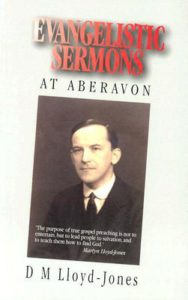 Lloyd-Jones, D. M.
  McGraw, Ryan, trans. “Johannes Wollebius’s Paecognita of Christian Theology from
  The thesis of Burer and Wallace in their NTS article is that one should take “
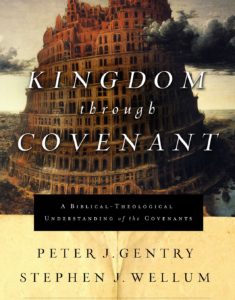 In this volume Wellum and Gentry embark on the ambitious project of laying out a third way between covenant theology and dispensationalism. They label their position New Covenant Theology or Progressive Covenantalism (others who hold a similar position are Tom Wells, Fred Zaspel, John Reisinger, Thomas Schreiner, and Jason Meyer). [Update 4/21/16: The authors wish to distinguish PC from NCT. The two share some similarities, but they do not wish them to be equated. Since Schreiner and Meyer both contribute to the new book on
 González’s history of Christianity is an excellent survey of church history. His style is engaging, the chapters and chapter sections are brief, and the is largely accurate. González is not an evangelical, so the reader will want to be discerning. For instance, I found him too open to the idea that there was not settled orthodoxy in the earliest history of the church. But in general I found his telling of the Christian story to be fair and accurate. Volume one ends just prior to the Reformation.