Exegesis and Theology

The Blog of Brian Collins

  • About
  • Writings
  • Recommended Resources
  • Categories
    • Christian Living
    • Book Recs
    • Biblical Theology
    • Dogmatics
      • Bibliology
      • Christology
      • Ecclesiology
    • Church History
    • Biblical Studies

Leeman, How the Nations Rage

September 13, 2018 by Brian

Leeman, Jonathan. How the Nations Rage: Rethinking Faith and Politics in a Divided Age. Nashville: Nelson, 2018.

Leeman, a pastor and theologian with a degree in political science, is writing to help American Christians think biblically about politics. While he states up front that he is “not a political radical” or revolutionary, and while he values the political heritage that Americans have been bequeathed, he is concerned that American Christians often accept certain political principles because they are American without examining whether they are truly biblical.

Separation of Chruch and State?

For instance, many American Christians read Jesus’s words in Matthew 22:21, “render to Caesar the things that are Caesar’s, and to God the things that are God’s” as if God’s things (“worship, faith, church, etc.”) belong in “the private domain” while the government’s things belong in the public domain. Leeman argues that Jesus’s words in Matthew 28 do not allow for this: “Jesus said he possesses all authority in heaven and on earth” (12). While Leeman affirms the separation of church and state (as two distinct institutions), he rejects “the separation of religion and politics.”

That is, Leeman rejects the old European model of Christendom in which church and state jointly ruled a nation. In Leeman’s view, this arrangement violated the unique spheres of authority that God gave church and state while bearing bad fruit (e.g., nominal Christianity, states that persecuted Christians in the name of Jesus).

But Leeman also rejects the model of John Locke and Thomas Jefferson in which the state rules over “outward things” and the church rules over personal, inward, religious matters. Leeman notes that people who hold such a view delude themselves into thinking that certain parts of life are not religious. For instance, the American values of “rights, equality, and freedom” may seem neutral. But when you ask: freedom to do what? rights to what? equality in what way? it becomes clear that religious viewpoints are smuggled in under these allegedly neutral terms. This, makes the fiction of a neutral public square damaging to the public good because it maintains a fiction.

Leeman explains:

When the non-Christian affirms his belief in the separation of church and state, he means separation of government from my church, not his own. He effectively says, ‘You can’t impose any of your beliefs and morals on me because they come from your church.’ Okay, but does that mean he cannot impose his idolatrous and non-Christian views on me? Ah, there’s the catch. He has no official church and no god with a name. And there’s no such thing as separation of idolatry and state. Too bad for me. Lucky for him. [41]

Thus the public square is not truly neutral: “What you really have is a square rigged against organized religion. Organized religions are kept out. Unnamed idols are let in” (34).

Leeman’s view is that the church and state should be largely separate institutions. God has given them two distinct jurisdictions. But all of life is religious. There is no neutrality.

What is at stake is found in the title of the book How the Nations Rage. While nations war among themselves, the greatest political rivalry is that of the nations conspiring against the Messiah. Leeman insightfully observes that “worship and rule belong together.” In a fallen world, rule is claimed by those who justify themselves as deserving the right to rule. Part of the challenge that Christians face is that the “politics of the new creation,” is currently present only in the church, which God by his Word and Spirit transforms hearts. And yet Christians are involved in the politics in this fallen world.

How Does the Bible Connect to Politics?

In order to navigate politics in a fallen world a right understanding of how the Bible relates to politics is needed. Leeman argues that “when it comes to thinking about politics, the Bible is less like a book of case law and more like a constitution. A constitution does not provide a country with the rules of daily life. It provides the rules for making the rules” (79). Leeman does not deny that the Bible makes some direct demands that should be translated into law. Law’s against murder come to mind. But in most cases, the Christian applying the Bible to the political realm is in need of wisdom. Leeman says that “wisdom is both the posture of fearing the Lord, as well as the skill of living in God’s created but fallen world in a way that yields justice, peace, and flourishing” (84; cf. Prov. 8:15-16). His point is that whereas there are some “straight-line issues” where the Bible can be directly applied (no murder means no abortion), most issues are “jagged line issues” where the Bible still applies, but not directly (e.g., health-care policy). Leeman argues that churches can bind people’s consciences on straight-line issues but should not do so with jagged line issues.

Why Do We Have Government?

Leeman then turns to the Bible’s teaching about the origin, purposes, and forms of government. He notes that the Bible’s view of the origin of government “sits uncomfortably with aspects of America’s liberal, democratic tradition.”

Our liberal, democratic tradition teaches that “governments derive their powers … ‘from the consent of the governed'” (101). This is the social contract view. On this view people lived in a pre-political state until they consented to form a government. Since the government provided a framework for life rather than something that regulated all of life, the formation of government created public aspects for everyone’s life while leaving a substantial portion of life private. The “source of the government’s moral authority … depends on our consent.” On this view, religion is considered a private matter, rather than a public one.

Leeman notes that the Bible’s view of government has no room for a “pre-political” state because everyone is “always under God’s rule.” When people form a social contract, they ought to do so under the rule of God since, according to the Bible “a government’s authority comes from God” (Rom. 13:1, 2, 4; John 19:11). “Our governments, after all, are simply a way of working out in time and space the rules that God has provided” (105).

Leeman’s discussion of the biblical purposes for government begins with Genesis 9. God requires “a reckoning for the life of man” in Genesis 9. From this, Leeman concludes that the first purpose of government is “To Render Judgment for the Sake of Justice.” Other biblical texts that support this purpose include 1 Kings 3:28; Proverbs 20:8; Romans 13:3-4. The second purpose of government also Leeman also derives initially from Genesis 9: “The authority that God gave to shed blood for blood (vv. 5-6) facilitates the larger enterprise of filling the earth and ruling over it (vv. 1 and 7)” (112). Thus the second purpose for government is “To Build Platforms of Peace, Order, and Flourishing.” See also Prov. 29:4; 16:12, 15; Joseph’s preparation for famine in Egypt and Mosaic regulations that provide for the poor. From 1 Timothy 2:1-4, Leeman discerns a third purpose for government: To Set the Stage for Redemption.” A good government “clears a way for the people of God to do their work of calling the nations to God.”

This last purpose of government raises the issue of religious freedom. Leeman supports the view that governments should tolerate false worship because Scripture authorizes no government, except Old Testament Israel, to punish people for false worship. Leeman points out that this argument is not based on the freedom of the conscience (though that is a “fruit” of the argument) but on the authorization that God gives to government. Second, Leeman argues that “governments possess no authority to exercise the keys of the kingdom, and no ability to coerce true worship” (122).

With all this in view, what is the best form of government? Americans may be tempted to answer, “democracy.” But Leeman observes that a democracy only functions well when “the right kind of political culture must be in place.” He observes, “There must be a strong tradition of respecting the rule of law. Citizens must prize honesty and eschew bribes. They must trust one another to keep their contracts. They must know how to negotiate, persuade, compromise, and lose votes, yet still submit to the system. Apart from these kinds of public and private virtues, democracy has a much harder time working” (122). The Bible itself provides “no abstract ideal form of government.” Instead, a good government is any government that fulfills the three biblical purposes for government noted above.

The Chruch and Politcs

Leeman then turns from the role of the government to the role of the church. He emphatically denies the path of arguing that the church focuses on spiritual matters while the government focuses on political matters. Instead, he asserts, “Every week that a preacher stands up to preach he makes a political speech. He teaches the congregation “to observe all” that the King with all authority in heaven and on earth has commanded (Matt. 28:20)” (131-32). On the other hand, Leeman is skeptical of making the church into a lobbying organization. He notes that it is beyond the church’s mission and competency to formulate public policy. “Therefore, churches should ordinarily not seek to influence government policy directly. … It risks misidentifying Jesus’ name with human wisdom. It risks abusing the consciences of church members. And it risks undermining Christian freedom and unity” (145). He observes, “I have watched churches unite their names and therefore the name of Jesus to a Supreme Court nominee, to presidential candidates, and to legislation in Congress. And nearly every time I want to ask, ‘Are you sure? Do you really want to stake the reputation of Jesus and the gospel to that nominee or candidate or reform?'”(148).

Leeman acknowledges there are certain issues that are so clear that the church can speak directly to them. In fact, he notes that “churches can sin and prove faithless by not speaking up in matters of government policy when they should” (147). But the church has to be able to discern the difference between what it can bind consciences on and what a Christian, working in a sphere outside the church, might conclude as he brings policy expertise together with a biblically-shaped worldview.

The Christian and Politics

The limitations that Leeman places on the involvement of the church as an institution do not apply to general Christian involvement in politics. In fact, Leeman argues that disengagement from civic life is wrong, as is capitulation, “positively endorsing the world and its ways.” Leeman cautions, “Be leery of being too captivated by any political worldview” (181). Neither the right or the left provide the Christian with a biblical worldview. For the Christian to simply embrace the zeitgeist of either side or either party will result in conformity to the world in some areas of life. A third wrong path is to be worldly in the way the Christian acts politically. “There is a way of engaging that’s right on the substance but wrong on the strategy or tone” (164).

Leeman also notes various strategies for Christian engagement in the political realm. The first approach is to find some common ground in the way the argument is made. For instance, Leeman observes that when the Affordable Care Act required employers to provide insurance coverage that included abortion, Christians objected to this requirement (and prevailed in court) on religious freedom grounds. Leeman notes that he agrees with the religious freedom argument, but he observes: “Religious freedom isn’t the real issue. It’s a backup issue. The real issue, for a Christian, is murder. We don’t want the state to require us to fund something we believe is murder” (183). A second approach is to appeal to natural law. This was attempted in the debate over the redefinition of marriage. A third way of engagement Leeman calls the “sociologists approach.” For instance, a Christian defending policies that support two-parent homes or opposing policies that undermine two-parent homes could point to studies showing that children do better in two-parent homes.

Leeman does not object to Christians deploying any of these approaches when appropriate. But he does issue a warning about these ways of making a political argument. “All three lack the force of conviction because the very thing they are good at—finding common ground—affirms our modern intuitions that all authority and moral legitimacy rests in every individual’s consent. Unless I can be convinced something is true on my terms, it must not be true. And so you owe it to me to convince me on my terms. Ironically, the very attempt to persuade risks hardening people in the deeper certainty that they are right” (184).

This objection runs up against the way Americans tend to think about the public square. Leeman observes that John Rawls argued that “we are morally obligated to only bring arguments that everyone can understand on his or her own terms” (186). Leeman calls this view “a Trojan horse for small-g god idolatry.” Governments do not make laws only about matters for which there is consensus. When there is no consensus, on whose terms is the decision made. Leeman argues that it is better to observe that everyone’s god is attempting to set the terms of the debate. There is no religiously neutral public square or religiously neutral public argument.

Justice

Leeman’s final chapter addresses the issue of justice. The primary responsibility of government is to ensure justice, and Americans have a particular viewpoint on justice. “Together Jefferson’s Declaration and Lincoln’s Address present America’s mission statement on justice: we are a people dedicated to the principles of equality, freedom, and natural rights” (204).

Leeman is skeptical that this view of justice works. Just as there is no religiously neutral public argument, so there is no religiously neutral approach to justice: “Pick your God or gods; out will come your views on justice. Pick your conception of justice; out will come your views on equality, freedom, and rights” (206). Leeman’s point is that equality, freedom, and rights are themselves empty concepts that will be filled with different content depending on one’s worldview.

Leeman also challenges the more recent views of identity politics. He notes such approaches deny the Bible’s teaching about our “common humanity” and speak as if both truth and morality are social constructs of different groups. Instead of bringing about justice, identity politics, pits groups against each other so that they cannot even communicate with each other, much less work together as citizens. In contrast, Leeman says “The Christian path affirms both our common humanity and our created differences. It requires color-blindness with respect to our oneness in Adam and (if believers) in Christ (Gal. 3:28). It requires color-consciousness with respect to our different experiences, histories, and cultural traditions, as well as the unique ways different people can glorify God (1 Cor. 12:13–14; Rev. 7:9)” (221).

Evaluation

Good books on Christians and politics are difficult to find. Often Christians are tempted to baptize current political philosophies (whether from the left or right) rather than testing these philosophies against Scripture. Leeman does an admirable job of letting the Bible challenge our customary ways of thinking. This is probably the best brief book on politics that I’ve read.

Filed Under: Book Recs, Christian Worldview, Government

Mumford on Metaphysics

September 11, 2018 by Brian

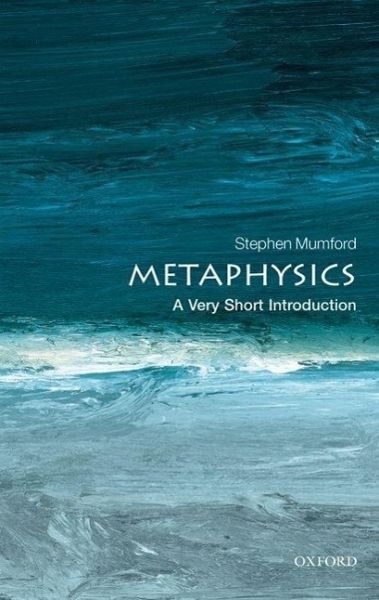
Mumford, Stephen. Metaphysics: A Very Short Introduction. New York: Oxford University Press, 2012.

This is another excellent entry in Oxford’s Very Short Introduction series. Mumford begins with seemingly simple questions, like what is a table and progressively works his way into deeper and deeper problems of metaphysics. His treatment is accessible for the non-philosopher, but it also does a good job of initiating the reader into the current philosophical arguments about metaphysics.

For the theologian, the lesson should be to avoid making any philosopher’s metaphysical theory the foundation for one’s theologizing. Some views are more and others are less compatible with Scripture. But the views themselves are so open for debate that they cannot provide a starting point for the theologian. To speak in traditional terminology, metaphysics may serve as a handmaid to theology, but it cannot be its master.

Filed Under: Book Recs

Gaffin on Epistemology and Natural Theology

September 8, 2018 by Brian

Richard B. Gaffin Jr., “Some Epistemological Reflections on 1 Cor 2:6–16,” Westminster Theological Journal 57, no. 1 (1995): 103–124.

This excellent article examines the structure of 1 Corinthians 2:6-16, links Paul’s teaching to Jesus’s teaching in Matthew 11:25-27 and Luke 10:21-22, and highlights the eschatological dimension of the wisdom of the Spirit in contrast to the wisdom of this age. He concludes that there is an “unbridgeable epistemological gulf between this age and the age to come, the yawning, nothing less than an eschatological chasm between belief and unbelief” (114). Thus, “1 Cor 2:6–16 (1:18–3:23) is the death blow to all natural theology. There is no knowledge of God resident in unbelievers or accessible to them that reduces the eschatological void that separates them from a saving knowledge of God” (123).

There is a debate today in Reformed theology about the role of natural theology and the place that theologians like Thomas Aquinas should play in formulating Protestant theology. Those who argue for a greater use of Thomas appeal to the Reformed Orthodox for precedent. Though writing over 20 years ago, Gaffin addresses this argument:

The prevailing reading of that history today—namely, that seventeenth-century Reformed and Lutheran orthodoxy is an abandonment of the Reformation that prepares the way for the Enlightenment and then Liberalism (until all has been made better by Karl Barth cum suis)—is a gross distortion. It does, however, contain a significant germ of truth. The increasing preoccupation of orthodox dogmatics with natural theology, particularly after Descartes, worked to undermine that orthodoxy and aided the rise of the very rationalism it was opposing. The tension is there, for instance, in Francis Turretin on the role of reason in theology. And the outcome—a permanent lesson that we miss to our theological peril—is the startling swiftness with which in the span of a single generation at the Academy in Geneva, from Turretin father to son, Reformed orthodoxy was virtually displaced and rendered impotent in the face of a frank rationalism, bordering on Socinianism, that was quick to follow. By now, too, we should have learned: natural theology may have a place in Roman Catholic and Arminian theologies—with their semi-Pelagian anthropologies [my apologies to my Arminian friends!] and qualified optimism about the unbeliever’s capacity to know God—but not in a theology that would be Reformed.” [123-24]

Filed Under: 1 Corinthians, Biblical Studies

Taliaferro, All the Great Prizes: The Life of John Hay, from Lincoln to Roosevelt

September 8, 2018 by Brian

Taliaferro, John. All the Great Prizes: The Life of John Hay, from Lincoln to Roosevelt. New York: Simon and Schuster, 2013.

I read this book for two reasons. First, I wanted to learn about American history from the end of Reconstruction to the beginning of the 20th century. Second, Henry Adams, grandson of John Quincy Adams and great grandson of John Adams was a close friend of John Hay and a major part of the story of this book. Having read biographies of the earlier Adamses, I was interested in reading more about the family.

The book was a success with regard to the first goal. John Hay was a significant figure throughout the last half of the nineteenth century, and a study of his life provides a good orientation to the political (and, in some cases, the cultural) issues of that era.

However, if David MacCullough’s biography of John Adams leaves a person inspired to develop a virtuous life, the lives of John Hay and Henry Adams are reminders that cultural sophistication and broad knowledge of the world is no substitute for true wisdom.

Filed Under: Uncategorized

Thomas Adams on the Sins of the Saints

September 4, 2018 by Brian

The falls of the saints are recorded, not as warrants to encourage our wantonness, but as cautions to prevent and retard our precipices. 1. Wicked men love that in the saints, which the saints never loved in themselves, vices: and shall a man make their foil his jewel, their shame his glory? 2. Thou speakest of their sins, but not of their repentance. When Theodosius excused a foul fact, because David had done the like, St. Ambrose makes this answer; Thou that hast followed David in his exorbitance, follow him also in his repentance. Hath thy mouth denied with Peter, let thine eyes weep with Peter.

Thomas Adams, An Exposition upon the Second Epistle General of St. Peter, ed. James Sherman (Edinburgh; London: James Nichol; James Nisbet & Co., 1862), 3.

Filed Under: Christian Living

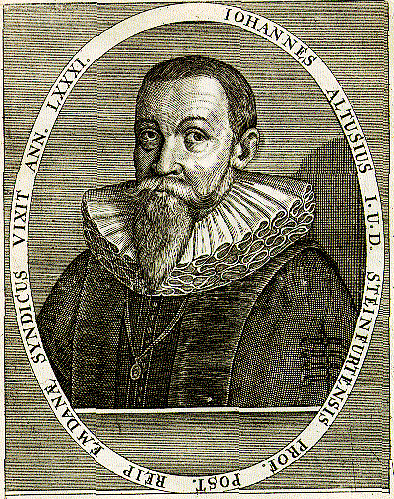
Johannes Althusius’s Politica and the idea of Federalism

September 1, 2018 by Brian

Althusius, Joannes. Politica: An Abridged Translation of Politics Methodically Set Forth and Illustrated with Sacred and Profane Examples. Edited and translated by Frederick S. Carney. Foreword by Daniel J. Elzazar. Indianapolis: Liberty Fund, 1995.

This is an early treatise of political theology from a Christian perspective by a 16th/17th century Reformed thinker. He was a colleague of Caspar Olevianus, coauthor of the Heidelberg Catechism (1563). He was an intellectual opponent to the still famous Hugo Grotius.

In defending the rights of cities and guilds, etc. against a push toward a unitary state, Althusius developed the idea of federalism. The term “federal” is related to the Latin word for covenant. For Althusius, a federal form of government is one in which the government is in covenant with the people and in which different levels of government are in covenant arrangements with each other.

The introduction to this particular translation (available for free from the Liberty Fund website) is helpful. Here’s a sample:

The first grand federalist design, as Althusius himself was careful to acknowledge, was that of the Bible, most particularly the Hebrew Scriptures or Old Testament. For him, it also was the best—the ideal polity based on right principles. Biblical thought is federal (from the Latin foedus, covenant) from first to last—from God’s covenant with Noah establishing the biblical equivalent of what philosophers were later to term natural law (Genesis, chapter 9) to the Jews’ reaffirmation of the Sinai covenant under the leadership of Ezra and Nehemiah, thereby adopting the Torah as the constitution of their second commonwealth (Ezra, chapter 10; Nehemiah, chapter 8). The covenant motif is central to the biblical world view, the basis of all relationships, the mechanism for defining and allocating authority, and the foundation of the biblical political teaching.

The biblical grand design for humankind is federal in three ways. First, it is based upon a network of covenants beginning with those between God and human beings, which weave the web of human, especially political, relationships in a federal way—through pact, association, and consent. In the sixteenth century, this world view was recreated by the Reformed wing of Protestantism as the federal theology from which Althusius, the Huguenots, the Scottish covenanters, and the English and American Puritans developed political theories and principles of constitutional design.

Second, the classic biblical commonwealth was a fully articulated federation of tribes instituted and reaffirmed by covenant to function under a common constitution and laws. Any and all constitutional changes in the Israelite polity were introduced through covenanting. Even after the introduction of the monarchy, the federal element was maintained until most of the tribal structures were destroyed by external forces. The biblical vision of the restored commonwealth in the messianic era envisages the reconstitution of the tribal federation. Most of the American Puritans and many Americans of the Revolutionary era, among others, were inspired by the biblical polity to seek federal arrangements for their polities.

Third, the biblical vision for the “end of days’ ’ —the messianic era—sees not only a restoration of Israel’s tribal system but what is, for all intents and purposes, a world confederation or league of nations, each preserving its own integrity while accepting a common Divine covenant and constitutional order. This order will establish appropriate covenantal relationships for the entire world. …

In some respects, all subsequent federalist grand designs until … the mid-nineteenth century are derived from or somehow related to that scriptural precedent. …

Althusius’ grand design is developed out of a series of building blocks or self-governing cells from the smallest, most intimate connections to the universal commonwealth, each of which is internally organized and linked to the others by some form of consensual relationship. Each is oriented toward some higher degree of human harmony to be attained in the fullness of time….

…In the struggle over the direction of European state-building in the seventeenth century, the Althusian view, which called for the building of states on federal principles … lost out to the view of Jean Bodin and the statists who called for the establishment of … centralized states where all powers were lodged in a divinely ordained king at the top of the power pyramid or in a sovereign center. While Althusian thought had its exponents until the latter part of the century, after that it disappeared from the mainstream of political philosophy. It remained for the Americans to invent modern federalism on the basis of individualism and thus reintroduce the idea of the state as a political association rather than a reified entity, an artifact that is assumed to have an existence independent of the people who constitute it.”

Daniel J. Elazar, “Althusius’ Grand Design for a Federal Commonwealth,” in Joannes Althusius, Politica: An Abridged Translation of Politics Methodically Set Forth and Illustrated with Sacred and Profane Examples, ed. and trans. by Frederick S. Carney (Indianapolis: Liberty Fund, 1995), 23-25.

Filed Under: Christian Worldview, Government

C. S. Lewis on Equality

August 30, 2018 by Brian

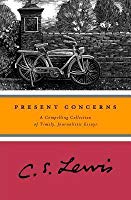
Lewis, C. S. Present Concerns. Edited by Walter Hooper. New York: Harcourt, 1986.

This is a collection of essays. I bought the collection for the essay “Equality,” which is full of insights worth pondering:

Lewis begins the essay, “I am a democrat because I believe in the Fall of Man.” He notes that most democrats follow Rousseau and are democrats because they believe in the goodness of mankind. But Lewis argues, “Mankind is so fallen that no man can be trusted with unchecked power over his fellows.”

This leads him to vitally important observation: “I do not think that equality is one of those things (like wisdom or happiness) which are good simply in themselves and for their own sakes. I think it is in the same class as medicine, which is good because we are ill, or clothes which are good because we are no longer innocent. I don’t think the old authority in kings, priests, husbands, or fathers, and the old obedience in subjects, laymen, wives, and sons, was in itself a degrading or evil thing at all.”

Having the right conception of equality is important: “When equality is treated not as a medicine or a safety-gadget but as an ideal we begin to breed that stunted and envious sort of mind which hates all superiority. That mind is the special disease of democracy, as cruelty and servility are the special diseases of privileged societies. It will kill us all if it grows unchecked.”

A wrong view of equality will kill us because equality is an unattainable ideal: “Where men are forbidden to honour a king they honour millionaires, athletes, or film-stars instead: even famous prostitutes or gangsters. For spiritual nature, like bodily nature, will be served; deny it food and it will gobble poison.”

Filed Under: Christian Living

Blaising on 2 Peter 3

August 25, 2018 by Brian

Blaising, Craig A. “The Day of the Lord Will Come: An Exposition of 2 Peter 3:1-18,” Bibliotheca Sacra 169, no. 676 (Oct-Dec 2012): 387-401.

Blaising follows Al Wolters’s interpretation that 2 Peter 3:10 refers to a refining of the earth and its works. He also takes stoicheia to refer to the heavenly bodies. He connects the idea of refining fire to Micah and to Isaiah 1-4. The latter passage especially indicates that the Lord’s fiery presence itself will both judge and refine the world when he comes.


Filed Under: 2 Peter, Biblical Studies

Henshall’s History of Japan

August 21, 2018 by Brian

Henshall, Kenneth. A History of Japan: From Stone Age to Superpower. Third edition. New York: Palgrave Macmillan, 2012.

I picked this book up because I wanted an accessible but accurate overview of the history of Japan. I picked the right book. The author impressed me as well informed and aware of debated issues in Japan’s history, but his telling remained accessible. Especially welcome were summaries at the end of each chapter not only of key events but key cultural ideas from the time covered.

Filed Under: Uncategorized

Notes on Herman Witsius’s Economy of the Covenants

August 20, 2018 by Brian

Eight years ago, on my honeymoon, I began slowly reading the Economy of the Covenants. Last month I finished the Economy. Below are the notes that I took. Hopefully some will find them helpful.

38ff -discussion of the meaning of Hebrew & Greek words for covenant

40 – Jer 34:18-20 gives the significance of walking between cut animals

41 – definition of a covenant between God and man

1.1.15- covenant of works and covenant of grace

1.2.1- interestingly, Witsius speaks of the Covenant of Works as something made with God and Adam as the federal head of our race, but the proof texts concerning the nature of this covenant are drawn from the Mosaic Covenant

1.2.5-8- A defense of Adam’s knowledge of the Trinity (speculative)

1.2.9-12- the nature of the image of God in man, esp. the nature of his righteousness before the fall 1 2

1.2.13- the fact that Adam was entrusted with the image of God and given sufficient faculties to maintain that image taken as evidence that he was in covenant with God

1.2.14-18- the federal headship of Adam found in Scripture and defended against objections

1.3.2-3- on natural law

1.3.4-6- on the existence of law before the Fall

1.3.7 – argued that the 10 commandments are in substance the same as the natural law that has been since Adam.

1.3.8-19- the law is based on the nature of God and not merely on his positive will

See comments on 1 Timothy 1:9 at 1.3.9

1.3.20-21- on the tree of the knowledge of good and evil

1.3.22-24- on the relation between natural law and the symbolic (but real) law prohibiting the tree of the knowledge of good and evil.

1.4.9- on eternity in heaven

1.4.4-8- on the promise of eternal life in the law

1.4.10-23 is an example of a Protestant Scholastic dealing with speculative matters. Notice the caution.

1.5.1-21- on the penalty of death pronounced in the garden

1.5.22-38 – on the penalty for sin being rooted in the nature of God – an excellent discussion of how the majesty, holiness of God are related to the punishment for sin.

1.5.39-42 – on the eternal duration of the penalty being rooted in the nature of God

1.6.4-10 – the significance of the garden of Eden to the covenant of works

1.6.11-15 – the significance of the tree of life

1.6.16-24 – the significance of the tree of the knowledge of good and evil

1.8 – the Fall

1.8.10-29 – God’s foreknowledge and providence in connection with the Fall

1.8.29 – why God is not the author of evil though he foreordains all things–the mystery of it

1.8.30 – the headship of Adam

1.9.2 elements of the covenant of works still in effect

1.9.3-15 – all sinners still under the law (of the covenant of works?) and are therefore bound to obey God & responses to Arminius’ arguments that sinners are not bound to obey God’s law.

1.9.18 – the covenant of works not abrogated in regards to the three items noted in 1.9.2, but this section notes the ways in which it was abrogated

1.9.18 – Witsius says that Heb. 8:13 refers not directly to the passing away of the covenant of works but to the passing away of the old economy of the covenant of grace, but that what he says can be extended to the covenant of works.

1.9.21 – The law is now a rule of duty, but it is no longer a federal rule that promises eternal life for obedience

1.9.23 – but the covenant of works is not abrogated by the covenant of grace; rather, the covenant of works was fulfilled by the mediator and this enabled the covenant of grace to come in it’s place.

2.1.5 – definition of the covenant of grace

2.2.2 – covenant between The Father and the Son as part of the Covenant of Grace.

2.2.3-7 – Scripture proofs for the covenant between Father and Son (often called covenant of redemption).

2.2.10 – content of the covenant of Redemption

2.2.11 – Christ’s baptism a sign and seal of the covenant of Redemption

2.2.16 – on the antiquity of the concept of a covenant of redemption

2.3.2 – the covenant between Father and Son extends back into eternity: 1 Pet. 1:20; Prov. 8:23; Eph 1:4; John 17:6; Rev. 13:8. 2.3.3 – the covenant between Father and Son further evidenced by the mediatorial role adopted by the sudden immediately after the fall.

2.3.4 – the third period of the covenant is the incarnation and beyond

2.3.5 – The law is (1) A directory of the Mediator’s nature and office and (2) a condition of the covenant. The Mediator himself may be considered as God, as man, as Mediator God-Man.

2.3.6 – The Son as God is not under the law, for he is co-equal with the Father and Spirit.

2.3.7 – Witsius argues that the Son as God did not subject himself to the Father, for as God he is equal to the Father.

2.3.8 – He was called an Angel before the incarnation not because he was a being inferior to God bit because he appeared to man as such, prefiguring the incarnation.

2.3.9-13 – The relation of Christ to the Law as man, Israelite, and Mediator.

2.3.14 – On the active obedience of Christ

2.3.15 – On the passive obedience of Christ

2.3.16-19 – The relation of the divine nature (or the divine and human natures hypostatically united) to the law.

2.3.20-26 – On the economic subordination of the Son to the Father

2.3.27 – On the errors if the Remonstrants (Arminians), including their conception of the freedom of the will.

2.3.28 – On the reward for Christ’s obedience, namely his glorification and what it is.

2.3.29-34 – On the obedience of Christ as the ground of His reward and ours

2.4.3-7 – The surety of the covenant must be a true man

2.4.8-9 – he must be sinless from conception

2.4.10-11 – on the virgin birth, the true humanity of Christ, and original holiness; whether only a symbol or necessary to escape original sin.

2.4.12-18 – on the necessity of the Messiah’s deity.

2.5.3 – On the covenant of redemption; on what is required for Christ to be our surety

2.5.4 – Why Christ is qualified to be our surety.

2.5.8 – “But we certainly take too much upon us, when we presume to examine the equity of the divine government, by the standard of our reason: when the fact is plain, we are always to vindicate God against the sophistry of our foolish reasonings.”

2.5.13 – On why we must still obey though Christ obeyed perfectly in our stead.

2.6.4-11 – Christ makes satisfaction for sin as our substitute in all his sufferings throughout his life and in his death

2.6.14 – In defense of the substitutionary atonement

2.7.1-2 – The efficacy of Christ’s satisfaction in securing salvation for the elect.

2.7.3 – “The effect of Christ’s satisfaction was not a bare possibility of the remission of our sins, and of our reconciliation with God but an actual remission and reconciliation.” cf. 2.7.4-5

2.7.8 – “true saving benefits are bestowed on none of the elect, before effectual calling, and actual union to Christ by a lively faith.” none the;ess Witsius says the elect before conversion “are in a state of reconciliation and justification actively considered.” 1 Cor 5:19

2.7.9-16 – against Arminius who says there is no actual remission, justification, or redemption of particular persons without that person’s faith

2.8.1 – The issue of the necessity of the atonement is not one of the absolute power of God–it is an issue of God’s “holiness, justice, and the like.” This is the issue: “whether God’s requiring Christ to give him satisfaction before h restore sinners to his favour, was owing to the mere good pleasure of the divine will; or whether the essential holiness, the justice, and the like perfections of God, which he cannot possibly part with, required a satisfaction to be made? We judge the last of these to be more true and safe.”

2.8.3 – The hypostatic union was ordained so the Son of God could suffer as a ransom for sinners. “Would not all this, to speak with reverence, seem a kind of solemn farce, if God by a single breath, could dispel all our sins as a cloud?”

2.8.7 – “If any affirm, that no satisfaction was necessary on account of the justice of God, but that he exacted it on account of some other perfections, namely to declare his power and will to punish sin, which he might suffer to go un[unished. I answer, such power and will are scarcely to be called perfections in God; seeing Christ, Mat. v. 45.48. reckons God’s mercy, long-suffering, and bounty towards men, even the unjust, amonghis perfections. Which would certianly be most laudable, if God could, as pleasure, let sin go unpunished.”

2.8.9 – God gave up his Son for his love to mankind (John 3:16; Rom 5:8; 1 John 4:10). But if God could have redeemed us without the suffering of his Son, what does that say of his love for his Son. “Love is truly great, and inexpressible to the last degree, when implacable justice having demanded the punishment of mankind God’s love to man and free purpose of salvation, have nevertheless prevailed by finding out that end in the treasures of divine wisdom, an amazing method of reconciling justice with mercy.”

2.8.10 – “Christ’s satisfaction was ‘a declaration of the righteousness of God,’ Rom. iii. 25.”

2.8.12 – Sacrifices of the Mosaic law cannot take away sin. “But why might not a thing so easily to be removed without atonement be expiated by the death of legal sacrifices?” The atonement necessary for our salvation.

2.8.14 – Justification through the blood of Christ alone and not by works of the law (Rom 3:19-21ff.) argues that God had to be satisfied before he could justify

2.8.15-16 – Heb. 10:26 implies a sacrifice is necessary for pardon. Also Heb. 6:6.

2.8.17 – Asserting the necessity of satisfaction displays the glory of God’s holiness, justice, wisdom, and grace.

2.8.19 – On why it doesn’t testify against God’s absolute power or the freedom of his will. Excellent discussion.

2.9 – Defense of limited atonement

2.10.1 – “thus far we have at large treated of those things that relate to the covenant between Christ and the Father; and might seem to have completely finished that subject; was it not proper to add something concerning the Sacraments, by which that covenant was confirmed.” See Heb. 7:20-21

2.10.2 – Jesus was circumcised and kept the Passover

2.10.3-7 – Lord’s Supper based off Passover

2.10.8 – Christ partook of the Sacraments to fulfill all righteousness, as is noted at his baptism.

2.10.10 – Some of the Father’s promises to Christ relate to the covenant of works and others to his office and work as Mediator.

2.10.11 – “We may now enquire, whether both of these kinds of promises were sealed to Christ, by the ordinary Sacraments of the Old and New Testament, which he partook of. But we must not determine anything rashly with respect to this: and therefore I shall modestly propose what I think most probable. There is indeed no reason why Christ, as a holy man, and who as such, was to be made happy, might not be confirmed in the faith of this promise by some certain Sacraments, as appears from the Sacraments of the Covenant of Works given to Adam before the fall. But that such Sacraments were for that purpose granted Christ, does not appear from Scripture. Moreover, I dare not affirm that the ordinary Sacraments, which Christ made use of, were subservient to the confirming the legal promises belonging to the Covenant of Works, because they are Sacraments of the Covenant of Grace. And it does not seem consistent, that the promises of the Covenant of Works should be sealed by the Sacraments of the Covenant of Grace.”

2.10.14 – “I therefore conclude, that the promises made to Christ as Mediator, were principally sealed to him by the Sacraments; Christ indeed, obtained these in virtue of his merits, or to speak with Paul, because he fulfilled the righteousness of the law; yet in themselves, and as they relate to believers, they are promises of the covenant of grace.”

2.10.22-23 – Significance of Christ’s circumcision

2.10.24 – Significance of Christ’s baptism

2.10.25-26 – Significance of Christ’s participation in Passover

2.10.-27 – The significance of Christ’s participation in the Lord’ Supper

3..1.4 – Roles of each member of the Trinity in the covenant with the elect / covenant of grace

3.1.5 – some externally in this covenant who are not internally in it

3.1.6 – Jeremiah 31 key passage in this covenant of grace / promises are grace in this life and glory to come

3.1.7 – promises of covenants of works and grace are same; conditions are different

3.1.8-13 – Covenant of Grace has no conditions (though given qualifications he is willing to use that term). We do not merit the promises of the covenant, the covenant is testament, the new covenant is frames promises

3.1.14 – Faith and holiness necessary for salvation, but not a condition as they are gifts from God

3.1.18 – faith and repentance given by God, salvation and obedience to the law follow

3.1.19 – faith is the instrument for laying hold on the covenant of grace, not the condition

3.1.20 – faith plays a different role in the New Covenant than works played in the Old Covenant

3.1.21-22 – No threatening in the covenant of grace; threatening all from the law

3.2.2 – “We therefore maintain, agreeable to the sacred writings, that to all the Elect, living in any period of time, 1st, One and the same eternal life was promised. 2ndly, That Jesus Christ was held forth as the one and the same author and bestower of salvation. 3rdly, That they could not become partakers of it in any other way, but by a true and lively faith in him. If we demonstrate these three things, none can any longer doubt, but that the covenant of grace must be, as to its substance, only one from the beginning. For, if the salvation be the same, and the author of it the same, the manner of communion with him the same, it is certain the covenant itself cannot be more than one.”

3.2.3-10, 15-32 – On the resurrection of the dead

3.2.35-40 – salvation through Christ even in the OT

3.2.41-43 – salvation by faith in the OT

3.3.2 – The one covenant of grace under two primary economies: the Old and New Testaments. The Old Testament not the legal covenant.

3.3.4 – OT: promises in shadows and Gentiles excluded

3.3.11 – First period of the Old Testament: Adam to Noah; Abel’s death a type of the Messiah’s and Enoch’s translation a type of Christ’s ascension

3.3.12 – Second period of the Old Testament: Noah to Abraham; Noah a type of the Messiah

3.3.13 – Third period of the Old Testament: Abraham to Moses; promises of the covenant of grace given to Abraham, the sacrament of circumcision, Melchizedek a type of Christ

3.3.14-15 – Fourth period of the Old Testament: Moses to John the Baptist/Jesus; deliverance from Egypt, giving of the law

3.3.16 – Diversity on when the economy of the New Testament begins: birth of Christ, beginning of his public ministry, the death of Christ, or Pentecost

3.3.17-18 – Witsius argues for a gradual transition from Old Testament economy to New

3.3.20 – Some instead of dividing the covenant of grace into two economies (Old and New Testament), divide it into three (promise, law, gospel).

3.3.21, 23 – Witsius notes that the ceremonies were lighter before Moses, but that there were still sacrifices, clean & unclean animals, and circumcision thus a period of promise is not without the yoke of law

3.4.1 – The benefits of the covenant of grace: “1. Election. 2. Effectual calling to the communion of Christ. 3. Regeneration. 4. Faith. 5. Justification. 6. Spiritual peace. 7. Adoption. 8. The Spirit of Adoption. 9. Sanctification. 10. Conservation, or preservation. 11. Glorification.”

3.4.2-3 – Election defined

3.4.4 – Election based on God’s purpose, counsel, or decree, not on our works: 2 Tim 1:9; Eph 1:11; Rom. 8:28; 9:11

3.4.5 – Election is to salvation (2 Thess 2:13); not to an external condition (as in 1 Sam. 10:24; John 9:70; Deut 4:36)

3.4.6-7 – of the book of life

3.4.8, 10-12 – Election is personal and particular, not general and indeterminate (as the election of who will believe). See Acts 2:23 where God’s counsel is said to be determinate and Rom 8:29-30 in which persons, not conditions are said to be elect; also Lk 10:20; Phil. 4:3; Christ know whom he has chosen: 2 Tim. 2:19; John 13:

3.4.13-23 – Election made from eternity: Acts 11:18; Eph 1:4, 11; Matt 25:34; Rev. 13:8; 2 Tim 1:9; 2 Thess 1:13.

3.4.24 – God’s freedom in electing whom he will. Matt. 11:26; Lk. 12:32; Rom 9:21; election not based on anything in man: Rom 9:11; 2 Tim 1:9; election not based on faith or holiness, because these are gifts from God and are the purposes for which we were chosen: Phil. 1:29; Eph 2:8; Eph. 1:4; John 15:16; 2 Thess 2:13

3.4.25 – The immutability of God’s counsel in general: Isa 14:27; 46:10; Rom 9:19; “If any decree of God could be changed, it would be because God either would not, or could not effect the thing decreed, or because his latter thoughts were wise and better than his first: all of which are injurious to God. You will answer; God, indeed, wills what he has decreed to be done, but on condition the creature also wills it, whose liberty he would no-wise infringe. I answer, Is God so destitute either of power, or of wisdom, that he cannot so concur with the liberty of second causes, which he himself gave and formed, as to do what he wills, without prejudice to, and consistently with their liberty?” Immutability of election: Rom 9:11; 2 Tim 2:19; Isa 49:15-16; Rev 3:5; Isa 4:3

3.4.27-29 – On assurance of election.

3.4.30 – praise to God for election

3.5.1 – “And this calling is that act by which those who are chosen by God are sweetly invited, and effectually brought from a state of sin to a state of communion with God in Christ, both externally and internally.”

3.5.2-3 – Called from sin to Christ

3.5.4-6 – Benefits of calling

3.5.7 – External call in nature and Scripture; internal call by the Spirit

3.5.8-14 – natural revelation; its content; leaves man without excuse, but not sufficient to save

3.5.15-20 – External call through preaching the Gospel

3.5.21-26 – internal call

3.6.4 – “Regeneration is that supernatural act of God, whereby a new and divine life is infused into the elect person spiritually dead, and that from the incorruptible seed of the word of God made fruitful by the infinite power of the Spirit.”

3.6.5-6 – spiritual deadness

3.6.8 – Regeneration happens in a moment

3.6.10 – Semi-Pelagian and Remonstrant views regarding preparation for regeneration

3.6.11 – Reformed views of preparation for regeneration as power of the word in the heart, sense of sin, dread of punishment. These are neither natural nor meritorious but are acts of God. Nevertheless, Witsius sees them as effects of regeneration rather than preparation for regeneration.

3.6.12 – Different meanings of regeneration

3.6.25-27 – Word the seed of regeneration

3.7.1 – Faith is “the principal act of that spiritual life implanted in the elect by regeneration, and the source of all subsequent vital operations.”

3.7.4-5 – Against faculty psychology – understanding and will acting of the one soul in different aspects; they are one thing considered from different aspects.

3.7.8-10 – Faith includes knowledge of the thing believed―not complete understanding of all things―what things must be understood.

3.7.11 – Faith includes assent

3.7.16 – the person who wavers in his belief may still have assent

3.7.17 – true faith includes love of the truth known and assented to

3.7.18 – Faith includes a hunger for Christ

3.7.19-23 – Faith includes receiving Christ as Lord

3.7.26 – Summary of teaching on faith

3.7.28-35 – true and false faith; discerning the difference

3.7.36 – reasons for lack of assurance; assurance expedient but not necessary for salvation

3.8.2-5 – definition of justification

3.8.5-15 – Controversy with Rome not that justification has a forensic sense, which they grant. Some eminent Protestants grant it is sometimes used in a non-forensic sense that entails sanctification, but Witsius does not think this justified by the passages cited.

3.8.16-26 – Witsius grants that there is a justification or declaration that people are righteous because they act righteously. Phineas and James 2 cited as examples

3.8.27 – “We thus define the Gospel justification of a sinner: ‘it is a judicial, but gracious act of God, whereby the elect and believing sinner, is absolved from the guilt of his sins, and hath a right to eternal life ajudged to him, on account of the obedience of Christ, received by faith.'”

3.8.29 – Christ’s original righteousness and active obedience

3.8.30-32 – imputation and union with Christ

3.8.33-36 – God as judge

3.8.37-42 – Christ’s righteousness and justification and imputation; justification by imputation of Christ’s righteousness necessary if justification is to be by grace and not by works

3.8.43-46 – justification addresses the sin problem

3.8.47-56 – the means of justification is faith alone; faith is not what is counted as our righteousness; faith not a work; faith not a condition of justification (the condition being perfect obedience, which condition Christ met)

3.8.57-63 – Different aspects of justification, such as its plan, its provision, its application, its assurance, future final verdict, etc.

3.8.64-67 – Future judgment/justification has its foundation both in inherent and imputed righteousness; inherent righteousness does not merit eternal life; good works are proof of faith, signs of hungering after righteousness, and works of God’s grace

3.8.68-77 – Justice and mercy at final judgment; works neither considered perfect nor meritorious.

3.9.1 – Reconciliation, the consummation of which is peace with God, follows on from Justification.

3.9.2 – What the peace of reconciliation is.

3.9.6 – God the initiator or reconciliation

3.9.13 – peace of conscience (= assurance?)

3.9.19 – gaining peace with God

3.9.20 – maintaining peace with God

3.9.21 – preservation and assurance

3.9.27 – difference between peace and carnal security

3.9.28 – how the peace of the New Covenant differs from that of previous covenants

3.10 – adoption

3.10.17-25 – difference between OT & NT believers

3.10.21, 25, 30 – the land for OT & NT believers

3.11.5-12 – difference between OT & NT believers regarding the Holy Spirit

3.12.3-6 – on holiness as distinctness from the world or the nations

3.12.7-9 – on holiness as being set apart to God

3.12.10 – on holiness as purity

3.12.11 – definition of sanctification

3.12.12-14 – different senses of sanctification as it relates to regeneration, effectual calling, and justification

3.12.20-26 – total depravity

3.12.27 – the significance of the term “old man.”

3.12.28-30 – mortification / putting off the old man

3.12.29-44 – putting on the new man; roles of understanding, will, affections, and body in this

3.12.45 – the parts of sanctification

3.12.46 – sanctification not merely the amendment of actions but the conferring of new habits.

3.12.48-51 – roles of the members of the Trinity in sanctification

3.12.62 – a holy ambition to be sanctified

3.12.67-79 – virtues in the natural man, virtues in the spiritual man, who pleases God.

3.12.80-95 – the rule of sanctification, the insufficiency of natural law, the great benefit of God’s law

3.12.96-103 – the end, or goal, of Christian virtues, the first of these being the glory of God, with considerations of self and neighbor following

3.12.104-117 – the means of sanctification, eight given

3.12.120-24 – why God permits the struggle between flesh and Spirit

3.12.25 – what the Scripture means when it calls some people perfect

3.13.2 – definition of conservation, or preservation

3.13.3 – distinctions between those in the church who are conserved and those who are not

3.13.5-8 – failings and declensions of those who do persevere

3.13.10-11 – apostates not preserved/restored ?

3.13.12-14 – Preservation based on the Father’s predestination

3.13.15 – Preservation based on the Father’s gift of believers to the Son; the Father will not let the Son lose his gift.

3.13.16-17 – Preservation based on the promises of the covenant of grace [he cites new convent passages]

3.13.18 – the Father preserves us by his power.

3.13.19 – Christ will not lose those he purchased with his blood.

3.13.20 – We are preserved because the Son intercedes for us.

3.13.21-24 – believers are living stones in the church Christ is building, and the gates of Hell will not withstand it.

3.13.25-26 – We are preserved because we are united to Christ and are part of his body.

3.13.27-29 – indwelling of the Spirit testifies to preservation

3.13.30-33 – We are preserved because the indwelling Spirit is the fountain of eternal life

3.13.34-37 – The Spirit’s role as seal guarantees preservation

3.13.38 – preservation accomplished by God’s supernatural power

3.13.39-40- the means by which the elect persevere

3.13.41-46 – how the doctrine of preservation promotes piety

3.14.4 – definition of glorification

3.14.5-10 – The first fruits of glorification in this life: holiness, vision of God, possession and enjoyment of God, full assurance of understanding, joy in God.

3.14.12-27 – On the intermediate state

3.14.28-32 – On the righteous in the intermediate state

3.14.33-41 – The righteous in the eternal state

4.1.2-26 – Gen 3:15

4.2 – Noah

4.3.3 – On OT appearances of God in human form as appearances of Christ

4.3.11-20 – Abrahamic covenant

4.3.21-23 – Abraham justified by faith

4.3.24-28 – Abrahamic covenant given to Abraham’s seed

4.3.30-38 – Job

4.3.32 – Angel of the Lord

4.3.40-41 – Identity and character of Balaam

4.4.2 – types of law in Mosaic Covenant ― moral, ceremonial, political – tid to three ways of considering Israel: Rational creatures (moral), church of the OT (ceremonial), a peculiar people (political)

4.4.4 – The angel who gave the law (Acts 7:39) was the Son of God. See Acts 7:35; Ps 68:18; Eph 4:8; Ps 68:7-8; Heb. 12:26

4.4.6 – The Son, economically considered, is the captain of the angels presnt at the giving of the law. Acts 7:58 with Dt. 33:2; Acts 7:35, 38; Ps. 68:17; Dan 4:17, 24

4.4.7 – The ministry of angels at the giving of he law – Dt. 33:2; Heb. 2:2; Gal. 3:19

4.4.9 – Law given on fiftieth day from Passover? (Pentecost connection?)

4.4.10 – Symbolic significance of Mt. Sinai’s location in the law/gospel contest

4.4.11-12 – The people’s internal impurity despite ritual holiness and the Law’s function of condemnation

4.4.14 – relation of the covenant of works and covenant of grace in the

4.4.17-19 – significance of God himself engraving the law on the tablets of stone

4.4.20 – significance of the two tablets

4.4.26 – Significance of placing the law in the ark of the covenant – Ex. 25:16; Dt. 10:5

4.4.27-37 – Is the Decalogue still binding on the church. Witsius affirms.

4.4.39-42 – the law’s role considered absolutely and relatively, in relation to man’s first, fallen, and restored state.

4.4.43-46 – The Decalogue is part of a covenant with Israel.

4.4.47-57 – Is the Mosaic law a covenant of works or of grace; Witsius argues that it is neither. It is a national covenant with Israel with elements of both

4.6.1-11 – Defense of typology / basic rules for interpreting types

4.6.12 – Three kinds of types: natural, historical, legal

4.6.13-14 – The visible creation a type of the regenerate as a new creation

4.6.16 – Resting on the 7th day a type

4.6.17 – Abel a type of Christ in humiliation

4.6.18 – Enoch a type of Christ in exaltation

4.6.20 – Noah a type of Christ

4.6.21-22 – The ark a type of both Christ and the church

4.6.23 – The waters of the Flood typify Christ

4.6.24 – The dove Noah sent out a type of the Spirit

4.6.31 – Moses as a type in relation to the law

4.6.32-35 – Moses as a type of Christ

4.6.36-39 – Aaron as a type of Christ

4.6.40-47 – typology of the ark of the covenant

4.6.48-73 – Typology of the Day of Atonement / Leviticus 16

4.7.4-5 – God’s clothing Adam and Eve with skins

4.7.6-16 – Symbolism of sacrifices

4.7.18-20 – Noahic covenant’s relation to the covenant of grace

4.7.21-26 – Significance of the rainbow

4.8.4 – John 7:22 – Jesus distinguished circumcision as given to the patriarchs since ‘to them it was a family institution’ and not required of followers of God who were not of Abraham’s family and circumcision as given by Moses, which was to be practiced by Gentiles who would come to worship the true God by joining with Israel.

4.8.11 – Ex. 12:19; Dt. 23:2 – Meaning of being cut off from the people

4.8.12 – Ex. 12:19 – this is a condemnation of adults, not children.

4.8.14-15 – Significance of the 8th day for circumcision

4.8.16-20 – Significance of circumcision

4.8.21-28 – Abrogation of circumcision

4.8.24 – Restoration of the Jewish nation

4.8.25-26 – The name Passover

4.9.6 – The sacrificial nature of Passover

4.9.17 – Description of Passover

4.9.33-58 – Significance/symbolism of Passover

4.10.3-5 – Red Sea/weedy sea – nature

4.10.6 – miraculous nature of Red Sea crossing

4.10.8-9 – Location of passage through the Sea

4.10.10-13 – Signification of ‘baptized unto Moses’ – 1 Cor. 10:

4.10.14 – Symbolism of Red Sea crossing

4.10.20-56 – Symbolism of manna

4.10.57-61 – Symbolism of water from rock

4.10.62-70 – Symbolism of brazen serpent.

4.11.1-2 – Blessing of the OT as a covenant of grace

4.11.3-4 – Benefit of Israel’s election

4.11.5-12 – Land promise a type; significance of the type

4.11.13 – Blessing of the display of divine majesty

4.11.14-17 – Blessing of ceremonies

4.11.18 – Blessing of an almost uninterrupted succession of inspired men.

4.11.18 – Cessation of prophecy

4.12.4-15 – Only temporal benefits, not true salvation, given before Christ – Witsius rejects

4.12.16-22 – Circumcision of the heart not a NT blessing alone -Dt. 30:1-6

4.12.23-26 – Writing of the law on the heart not peculiar to the NT

4.12.26 – relation of the Mosaic covenant to the covenant of grace

4.12.27-43 – justification, remission, forgiveness all available in the OT

4.12.44-49 – Relation of adoption to OT & NT

4.12.50-55 – Witsius affirms that OT saints had peace of conscience (Heb. 10:1).

4.12.56-59 – OT church not specially under the domain of angels – Heb. 2:5

4.12.60-69 – OT saints not subject of fear of temporal death all their life. Heb. 2:15

4.12.70-78 – Denies that OT believers remained under God’s wrath and curse – Gal. 3:10

4.13 – Real defects in the OT

4.13.2-4 – cause of salvation not present and complete

4.13.5-8 – obscurity

4.13.9 – great rigor and severity

4.13.10-16 – Bondage to the elements of the world – 1. Multitude of rites. 2. Reproach of childhood. 3. Middle wall of partition between Jew and Gentile. 4. Law = enmity between Jews and Gentiles 5. Handwriting in ordinances contrary to those who observed them.

4.13.17-21 – Spirits of bondage

4.13.22-27 – more scanty measure of the gifts of grace

4.13.28-32 – Hunger and thirst for a better condition

4.14.2-6 – 1. Moral law founded on God’s holiness and cannot be abolished; ceremonial law founded on God’s will and may be abolished. 2. God often in the OT expresses preference for the moral law over the ceremonial. 3. The church existed before the ceremonial law and can exist after its abrogation

4.14.7-10 – 1. God always intended the ceremonial law to cease because he gave them to one nation in a particular place. But the prophets prophesied of a future day when the nations would be saved and these ceremonies were not given to them. Nor, given the unity of Jew and Gentile was it fitting for the Jews to continue with them. 2. God promised a prophet like Moses and he would institute a new form of worship.

4.14.11-17 – Jewish understanding of prophet like Moses & reasoning

4.14.17 – Jesus says he will not abolish the law or prophets – Matt. 5 – Interpretation and response to objections.

4.14.18-25 – Jeremiah 31 and the abrogation of the Old Covenant.

4.14.21 – Superior promises of the NC

4.14.23-25 – NC a new covenant; not merely a renewal

4.14.26-32 – Abrogation of the old covenant seen in the “removal of the ark of the covenant, not only out of the world, but also out of the memory and heart of believers,” – Jer. 3:16-17

4.14.33-40 – Abrogation of Levitical priesthood / replaced by priest after the order of Melchizedek. – Interpretation of Psalm 110.

4.14.36 – Davidic authorship of Psalms; Psalm titles

4.14.41-46 – Abrogation of the sacrifices.

4.14.47-53 – The ceremonies ought to be abrogated because of the bringing in of the Gentiles. See 4.14.48-49 for passages about bringing the Gentiles

4.14.54 – Stages of abrogation: 1. Christ’s humanity. 2. Christ’s death. 3. Pentecost. 4. Peter’s sheet vision. 5. Jerusalem Council. 6. Paul’s letter – 1 Cor. 8; 10. 7. Acts 21:22. 8. Paul’s rebuke of Peter – Gal. 2. 0. Destruction of the temple.

4.15.7 – Ways the NT gospel more excellent than the OT

4.15.8-13 – bringing in of the Gentiles

4.15.14-15 – Ways in which the measure of the Spirit is more abundant in the NT enumerated

4.15.16-19 – Christian liberty

4.15.20-37 – Latter day salvation of the Jewish nation – Rom. 11:25-29; See esp. the list of OT prophecies in 4.15.31

4.16.2-8 – Jewish antecedents to baptism

4.16.9-11 – John’s baptism

4.16.13-15 – immersion the ancient practice, pouring and sprinkling permitted; trine or single baptism immaterial

4.16.17-24 – significance of baptism

4.16.25-30 – symbolism of immersion

4.16.31-32 – symbolism of washing

4.16.33-39 – How baptism teaches us our duty

4.16.40-50 – defense of infant baptism

4.17 Lord’s Supper.

Notes

  • 1
    ↩︎
  • 2
    ↩︎

Filed Under: Uncategorized

  • « Previous Page
  • 1
  • …
  • 27
  • 28
  • 29
  • 30
  • 31
  • …
  • 87
  • Next Page »