Exegesis and Theology

The Blog of Brian Collins

  • About
  • Writings
  • Recommended Resources
  • Categories
    • Christian Living
    • Book Recs
    • Biblical Theology
    • Dogmatics
      • Bibliology
      • Christology
      • Ecclesiology
    • Church History
    • Biblical Studies

Ryan McGraw Reviews Systematic Theologies by Michael Horton and John Frame

December 4, 2017 by Brian

McGraw, Ryan M. “Shifting Paradigms in Reformed Systematic Theology: A Review Article of Michael Horton’s The Christian Faith: A Systematic Theology for Pilgrims on the Way,” Puritan Reformed Journal 5, no. 2 (July 2013): 245-59.

McGraw praises Horton for writing an orthodox, well-organized, systematic theology that addresses contemporary challenges. However, McGraw critiques Horton for adopting new paradigms in three areas.

First, Horton weaves speech-act theory throughout his treatment of theology, connecting the Father with locution, the Son with illocution, and the Spirit with perlocution. McGraw observes, “The advantage to this theory is that it involves all three persons of the Godhead simultaneously and distinctly; the disadvantage is that it makes everything that God does a speech-act or declaration” (248). One infelicitous effect noted by McGraw is the tendency to subsume all of soteriology under the forensic declaration of justification. He is also concerned that it “adopts too many aspects of a post-modern metaphysic and epistemology” (249).

Second, Horton also makes use of the essence/energies distinction common in Eastern Orthodox Trinitarian theology. While Horton sees a convergence with Reformed theology and Eastern Orthodox theology at this point, McGraw does not. He argues that this distinction leads to viewing God as “unknowable” rather than “incomprehensible.” He also thinks that “this distinction threatens to shift soteriology from solving an ethical problem to addressing an ontological one.” Horton clearly does not want to embrace the latter and probably would not want to embrace the former, but McGraw thinks the essence/energies distinction pushes him in those directions.

Third, McGraw critiques Horton for viewing the entire ordo salutis through the lens of justification. By making justification, rather than union with Christ, the central reality of soteriology from which the other benefits flow, all of soteriology, even regeneration, become forensic. This approach also leads Horton to minimize the accomplished/application distinction and opens the door (though Horton does not proceed through it) to antinomianism.

I found McGraw’s review helpful to keep in mind as I use Horton’s The Christian Faith and as I work through his more detailed four book set theology.

McGraw, Ryan. “Toward a Biblical, Catholic, and Reformed Theology: An Assessment of John Frame’s Systematic Theology: An Introduction to Christian Belief.” Puritan Reformed Journal 8, no. 2 (2016): 197-240.

McGraw’s assessment of Frame’s Systematic Theology can be summarized in a paragraph at the beginning of his review:

“His theology is simultaneously brilliant, innovative, and eccentric. Its primary strengths are the clarity of his arguments, his extensive use of Scripture, and his ability to interact critically with unbelief. The primary weakness of his theology lies in its lack of connection to historic Reformed theology. This is a problem because the absence of historical theology will almost always result in detachment from the confession of the church and an interpretation of the Bible that detracts from rather than promotes church unity. [198]

Despite general positive comments here and at the end of the review, McGraw’s treatment is otherwise entirely negative. He first faults Frame for focusing on the doctrines of God, the knowledge of God, and Scripture to the comparative neglect of Christology, soteriology, and ecclesiology. This is true enough, but as it reflects the emphasis in Frame’s teaching and writing ministry, it seems hard to fault him on this point. I don’t have the impression that Frame was attempting to write a standard classroom textbook.

McGraw also critiques Frame for building his theology around the concept of Lordship. He thinks that organizing theology around the attributes of Lordship, defined as authority, control, and presence, undermines the doctrine of simplicity by singling out some attributes at the expense of others. He also observes that in the Bible Yhwh refers to God in his totality rather than just to his lordship. Finally, Lordship is a relative attribute, one that has to do with God’s relationship to his people rather than to God himself. Regarding the first of these critiques, while I’ve not found the control, authority, presence triad as useful as some of Frame’s other triads, I don’t think Frame’s point is ontological. It is a heuristic device. The third point may have some merit, but as the Bible itself focuses on revealing God in relation to his people, I wouldn’t make too much of this point. The second point is valid. I have long thought that Frame’s move from Yhwh to the title of “Lord” was exegetically untenable and theologically thin.

Related to this critique is a critique of Frame’s multiperspectivalism. McGraw seems to think that Frame’s normative, situational, and existential perspectives remove Scripture from its place of ultimate authority, but this is clearly a misreading of Frame which he addresses in his Doctrine of the Knowledge of God (I don’t know if he addresses it in his ST as I’ve not read Frame’s ST).

McGraw also dings Frame for defining theology as “the application of Scripture, by persons, to every area of life.” McGraw says that historically the Reformed affirmed “that theology was both theoretical and practical.” He does not think Frame’s definition captures this. But Frame’s definition is not much different from Ames who, according to McGraw, “famously defined theology as the doctrine of living to God.” McGraw could also have mentioned William Perkins’s definition: “the science of living blessedly forever.” Frame is not substantially different from these historic definitions, and he does not deny the theoretical side of theology. So it is difficult to see the nit that is being picked here.

McGraw next faults Frame for holding to a covenant of creation district from the covenant of works and for over-reliance on studies of ANE covenants in framing his doctrine of the covenants. I’m with McGraw on these criticisms.

Finally, McGraw critiques Frame for a methodology that is “something close to biblicism.” The value of these critiques vary. The knock against triperspectivalism because “this construction does not arise from simple and straightforward exegesis” misses Frame’s own point about his methodology. It seeks to hold Frame to a standard he hasn’t set for himself. As the standard is neither Frame’s nor McGraw’s own, the critique seems unnecessary. The critique that Frame fails to engage with historical theology is valid. I’ve long thought that this is Frame’s greatest weakness. The objection that Frame does not hold strictly to creeds or confessions is more difficult. Creeds and confessions are important but they are not infallible. If I am disturbed by Frame’s lack of engagement with historical theology (and I am), I am also concerned about those who want to settle theological debates by appealing to creeds or historical theology without also making the exegetical case for their position.

In general this was a helpful review, but I think McGraw would have enhanced the force of his best critiques if he had replaced his weakest critiques with measured praise of specific aspects of Frame’s work.


Filed Under: Book Recs, Dogmatics

Albert Martin’s The Forgotten Fear: Where Have All the God-Fearers Gone?

December 2, 2017 by Brian

Martin, Albert N. The Forgotten Fear: Where Have All the God-Fearers Gone? Grand Rapids: Reformation Heritage Press, 2015.

Martin argues that “the fear of God, which is the soul of godliness, is a fear that consists in awe, reverence, and honor, and all of these things in a profound measure of their exercise” (54). In this book, he argues that “fear of the Lord” is one of the Bible’s central ways of describing godliness. The book is in large measure an exhortation to stir up God’s people to fear him. Martin roots the fear of God in the new covenant and in the forgiveness of sins. Fear of God is not produced by human effort, but it can be fostered by the believer by means of Scripture, prayer, and meditation. This is the kind of book that repays slow and repeated reading.

Filed Under: Christian Living

Articles and Notes on Holiness and Sanctification

December 1, 2017 by Brian

Peter J. Gentry, “The Meaning of ‘Holy’ in the Old Testament,” Bibliotheca Sacra 170, no. 677–680 (2013): 400–417.

Gentry challenges the traditional understanding of holiness as denoting “moral purity,” and “transcendence” or set-apartness. He first challenges the idea קדש can be defined by means of the surmised etymological link with קד, “to cut.” Gentry proposes that a usage study, done by Claude Bernard Costecalde in 1986, of both the Hebrew word and its equivalent in congate languages does not support either “moral purity” or “transcendance” as the meaning of holy. In line with Costecalde’s analysis Gentry concludes: “The basic meaning of the word is ‘consecrated’ or ‘devoted.'” Gentry surveys texts in Exodus 3, 19, and Isaiah 6 to establish this point.

In the end, I’m sympathetic to the idea that the basic meaning of קדש is “devoted,” but I didn’t see “set apart” or “moral purity” to be as decisively excluded from the range of meaning as Gentry argues. Gentry also seems to have a fairly negative view of the discipline of systematic theology in comparison to biblical studies: “Indeed, systematic theologians of the last five hundred years have not been helpful in explaining what Scripture teaches on this topic due to reliance on doubtful etymologies and connection of the term with moral purity and divine transcendence.” But more than Gentry’s exegesis, it was a theological observation from Sinclair Ferguson’s Devoted to God that convinced me that at its root holiness about being devoted. Ferguson observes that holiness, as an attribute of God, has to have a meaning that works apart from the created order. Being transcendent or set apart does not work theologically whereas devoted does.

O’Donovan, Oliver. “Sanctification and Ethics.” In Kelly M. Kapic, ed. Sanctification: Explorations in Theology and Practice. Downers Grove: InterVarsity, 2014.

I find O’Donovan’s writings difficult to comprehend, as if I’m not yet acquainted with his dialect. In this essay I at points wondered about his commitment to the Reformation distinction between justification and sanctification. More positive were his helpful reflections on the relation of ethics to dogmatics and his observation that age does not confer sanctification. Each period of life has its own challenges to holiness that must be met.

Eglinton, James. “On Bavinck’s Theology of Sanctification-As-Ethics.” In Kelly M. Kapic, ed. Sanctification: Explorations in Theology and Practice. Downers Grove: InterVarsity, 2014.

Eglinton argues that Bavinck was just as much an ethicist as he was a dogmatician. He was actually working on a Reformed Ethics at the same time he was writing the Reformed Dogmatics. He seemed to give up the ethics project when he moved to the Free University and the professor of ethics there was writing, and completed, a Reformed Ethics. At that point Bavinck turned to writing essays that were, in effect, applied ethics. Eglington’s article is largely helpful historical situation of Bavinck as ethicist with a brief summary of his approach and with many useful works to follow up in the footnotes.

Bavinck on Sanctification

The kingdom of God is a gift granted by God according to his good pleasure (Matt. 11:26; 16:17; 22:14; 24:22; Luke 10:20; 12:32; 2:29), yet it is also a reward, a treasure in heaven, which has to be aggressively sought and gained by labor in the service of God (Matt. 5:12, 20; 6:20; 19:21; 20:1ff.; and so forth). Believers are branches in the vine who cannot do anything apart from Christ, yet at the same time they are admonished to remain in him, in his word, in his love (John 15). They are a chosen people, and still have to be zealous to confirm their call and election (2 Pet. 1:10). By a single offering of Christ they have been sanctified and perfected (Heb. 10:10, 14). God effected in them that which is good (13:21), yet they must still persevere to the end (3:6, 14; 4:14; 6:11-12). They have put on the new self and must continually clothe themselves with the new self (Eph. 4:24; Col. 3:10). They have crucified the flesh with its desires, and must kill its members who are on the earth (Gal. 5:24; Col. 3:10). They are saints and sanctified in Christ Jesus, and must nevertheless become holy in all their conduct (1 Pet. 1:15; 2 Pet. 3:11), pursuing and perfecting their sanctification in the fear of God (2 Cor. 7:1; 1 Thess. 3:13; 4:3), for without it no one will see the Lord (Heb. 12:14).

Herman Bavinck, Reformed Dogmatics, 4:254.

On the one hand this union of believers with Christ is not a pantheistic mingling of the two, not a ‘substantial union,’ as it has been viewed by the mysticism of earlier and later times, nor on the other hand is it mere agreement in disposition, will, and purpose, as rationalism understood it and Ritschl again explained it. What Scripture tells us of this mystical union goes far beyond moral agreement in will and disposition. It expressly states that Christ lives and dwells in believers (John 14:23; 17:23, 26; Rom. 8:10; 2 Cor. 13:5; Gal. 2:20; Eph. 3:17), and that they exist in him (John 15:1-7; Rom. 8:1; 1 Cor. 1:30; 2 Cor. 5:17; Eph. 1:10ff.). The two are united as branch and vine (John 15), as are head and members (Rom. 12:4; 1 Cor. 12:12; Eph. 1:23; 4:15), husband and wife (1 Cor. 6:16-17; Eph. 5:32); cornerstone and building (1 Cor. 3:11, 16; 6:19l Eph. 2:21; 1 Pet. 2:4-5). This mystical union, however, is not immediate but comes into being by the Holy Spirit….The very first gift that believers receive is already communicated to them by the Spirit, how takes everything from Christ (John 16:14). It is he who regenerates them (John 3:5-6, 8; Titus 3:5); gives life to them (Rom. 8:10); incorporates them into fellowship with Christ (1 Cor. 6:15, 17, 19); brings them to faith (2:9ff.; 12:3); washes, sanctifies, and justifies them (6:11; 12:13; Titus 3:5); leads them (Rom. 8:14); pours out God’s love into their hearts (5:5); prays in them (8:26); imparts to them an array of virtues (Gal. 5:22-23; Eph. 5:9) and gifts (Rom. 12:6; 1 Cor. 12:4), especially the gift of love (1 Cor. 13); prompts them to live by a new law, the law of the Spirit (Rom. 8:2, 4; 1 Cor. 7:9; Gal. 5:6; 6:2); and renews them in intellect and will, in soul and body (Rom. 6:19; 1 Cor. 2:10; 2 Cor. 5:17; 1 Thess. 5:23). In a word, the Holy Spirit dwells in them and they live and walk in the Holy Spirit (Rom. 8:1, 4, 9-11; 1 Cor. 6:19l Gal. 4:6; and so forth)

Herman Bavinck, Reformed Dogmatics, 4:250-52.

Justification and sanctification, accordingly, while distinct from each other, are not for a moment separated. They are distinct: those who mix them undermine the religious life, take away the comfort of believers, and subordinate God to humanity. The distinction between the two consists in the fact that in justification the religious relationship of human beings with God is restored, and in sanctification their nature is renewed and cleansed of the impurity of sin. At bottom the distinction rests on the fact that God is both righteous and holy.

Bavinck, Reformed Dogmatics, 4:249.

But there is something else as well: the moral law that confronts us in the Decalogue, in the Sermon on the Mount, and further throughout the Old and New Testaments is not the case of ‘precept upon precept, line upon line, here a little, there a little’ [Isa. 28:10, 13] but comprises universal norms, great principles, that leave a lot of room for individual application and summon every believer to examine what in a given situation would for them be the good, acceptable, and perfect will of God (Rom. 12:2). Since the moral law is not a code of articles we merely have to look up in order, from moment to moment, to know exactly what we must do, there is in its domain a freedom that may not be curbed by human ordinances but must—precisely to safeguard the character of the moral life—be recognized and maintained. On the one hand that freedom includes the permissible, the adiaphora, and on the other what Rome calls the ‘counsels.’ Error begins in both schools of thought when the adiaphora and the counsels are located outside or alongside of, below or above, the moral law and are therefore detached from the moral life. There is no right or reason for this either in the one or in the other case. There are cases in which what is in itself permissible becomes impermissible (Rom. 14:21, 23; 1 Cor. 8:13; 10:23); and there are also circumstances in which abstention from marriage (Matt. 19:11; 1 Cor. 7:7), giving up remuneration (1 Cor.9:14-19), the renunciation of all earthly goods (Matt. 19:21), or the like is a duty. But in ‘doing’ these good works one is not accomplishing anything that is outside the moral law or surpasses it. For there is a difference between a law that furnishes universally valid rules and a duty that is inferred from that law in a given case for everyone personally. Those who lose sight of this and assume the existence of a series of good works that really lie outside of and surpass the moral law fail to honor its unity and universality and degrade it.

Herman Bavinck, Reformed Dogmatics, 4:259-60.

Filed Under: Uncategorized

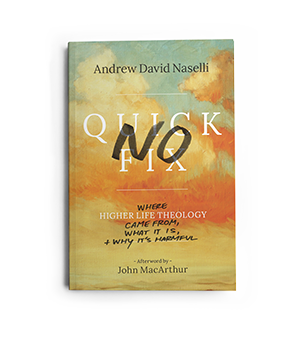
Naselli, No Quick Fix

November 30, 2017 by Brian

Naselli, Andrew David. No Quick Fix: Where Higher Life Theology Came From, What It Is, and Why It’s Harmful. Bellingham, WA: Lexham, 2017.

This book, a popularization of Andy’s first dissertation, does just what its subtitle says it does. It gives a history of higher life theology, describes what it is, and provides ten reasons for rejecting it. An appendix provides resources that make a positive contribution to understanding and applying the doctrine of sanctification.

The book is brief, the writing is clear, the theology it espoused is sound. At times Andy provides exegetical treatments of key passages (e.g., Ephesians 5:18). These were often so good that I dropped them into my notebooks on those passages. Highly recommended.

Filed Under: Dogmatics, Soteriology

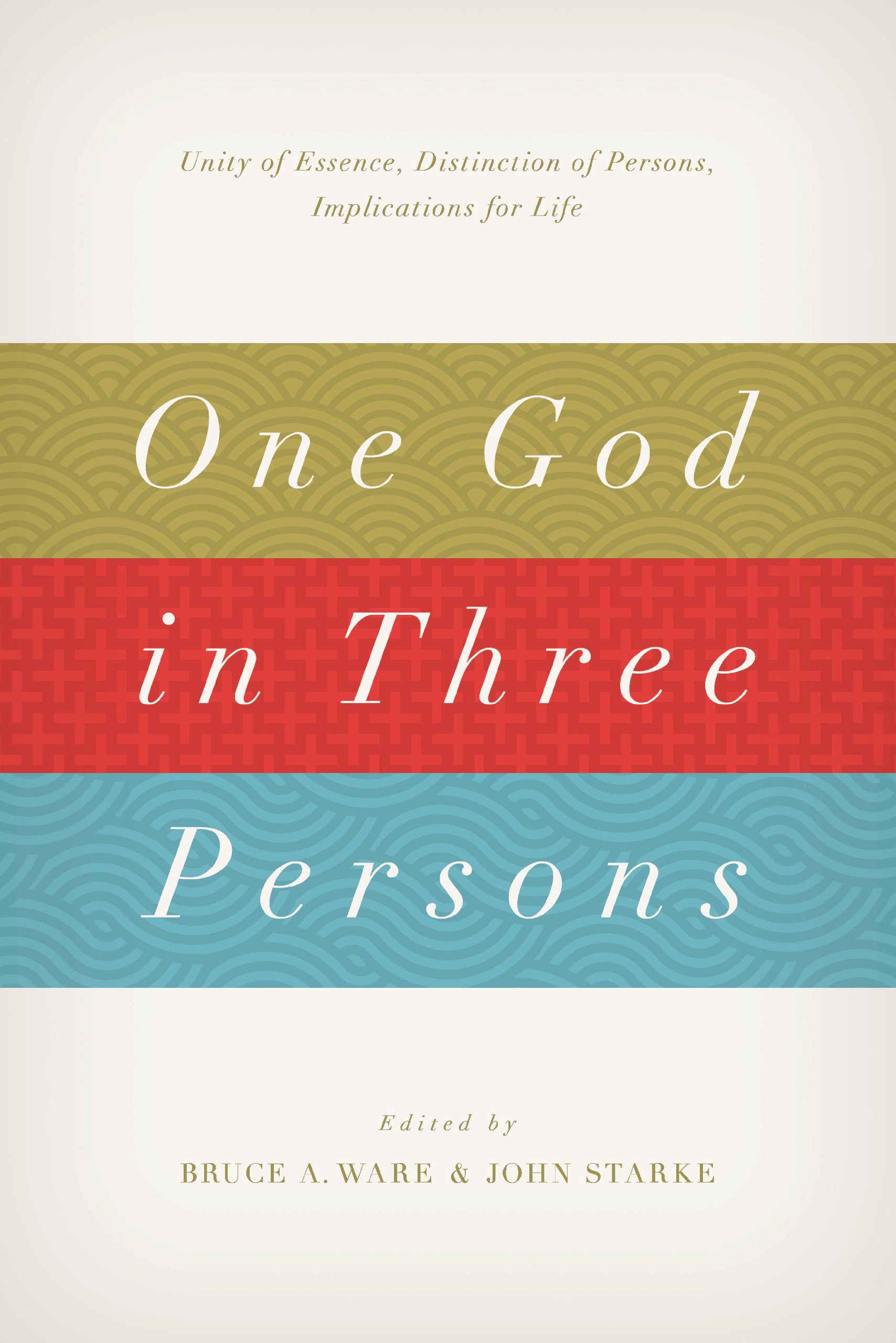
Naselli and Gons, “An Examination of Three Recent Philosophical Arguments against Hierarchy in the Immanent Trinity.”

November 29, 2017 by Brian

Naselli, Andrew David and Philip R. Gons, “An Examination of Three Recent Philosophical Arguments against Hierarchy in the Immanent Trinity.” In One God in Three Persons. Edited by Bruce A. Ware and John Starke. Wheaton, IL: Crossway, 2015.

Naselli and Gons defend Eternal Functional Subordination (EFS), defined as “the Son is eternally and necessarily subordinate to the Father, not in terms of his deity, but in his role in relationship to the Father” (197), against three philosophical arguments brought against it in favor of Eternal Functional Equality (EFE), defined as “the Father and Son are completely equal in all noncontingent ways: all subordination is voluntary, arbitrary, and temporary” (197).

The first EFE argument essentially says that if the Son has the property of being necessarily and eternally submissive to the Father, then the Son is not homoousios with the Father because he has a property that the Father does not have. Naselli and Gons reply that this argument only works by equivocating on the term “essential.” Furthermore, if deployed consistently, the argument would deny the eternal generation of the Son because it would deny that the Son can have the property of being necessarily and eternally generate.

The second EFE argument says that EFS entails that the Father could not have become incarnate, which denies omnipotence to the Father. Naselli and Gons reply that no proponent of EFS assert that “it is not even theoretically possible for the Father or the Spirit to be united to a human nature” (207). Rather, they distinguish between what is “possible” and what is “fitting.” Because it is fitting for the Son, and not the Father and the Spirit, to become incarnate, it is not possible given the wisdom of God and the world he created for the Father or Spirit to become incarnate (possible as used here is not connected with the issue of omnipotence).

The third EFE argument is that if passages about the Father sending the Son point to EFS of the Son to the Father, then the Son is eternally submissive to the Spirit as well because sent by him (Matt. 4:1; Mark 1:12; Luke 4:1). Naselli and Gons reply that these sendings are different. The Spirit sends the incarnate Jesus to the wilderness which is qualitatively different from the Father sending the pre-incarnate Son into the world.

Though this article does not resolve the controversy or demonstrate that EFS is true, it does clearly refute three poor EFE arguments made against EFS.

Filed Under: Dogmatics, TheologyProper

Swain and Allen on the Obedience of the Eternal Son

November 27, 2017 by Brian

Swain, Scott and Michael Allen. “The Obedience of the Eternal Son,” International Journal of Systematic Theology 15, no. 2 (April 2013): 114-34.

Swain and Allen observe that in the last century numbers of theologians have argued that obedience is part of the Son’s proper work eternally in the external works of the Trinity. This observation includes not only evangelical theologians such as Grudem and Ware but also theologians such as Barth and von Balthasar.

Worryingly for Swain and Allen, “Affirming the obedience of the only-begotten Son has in many cases entailed significant revisions to classical trinitarian metaphysics” (115). They list as examples: “historicizing of the doctrine of God,” “metaphysics of trinitarian kenosis,” “replacing eternal generation with obedience as the Son’s distinguishing personal property,” and “social trinitarianism, which affirms three centers of self-consciousness and willing within the triune God.”

Swain and Allen wish to affirm “the claim that obedience constitutes the proper form of the Son’s divine work in the economy of salvation.” They wish to avoid adjusting “traditional trinitarian metaphysics” (116).

They therefore argue that rather than working from economy back to essence, one should work from essence toward economy: “mode of acting follows mode of being.” With this approach, “the Son’s obedience to the Father in the economy of salvation” is “the economic extension of his eternal generation.” It “constitutes the proper filial mode whereby he executes the Trinity’s undivided work of salvation” (117). The wording here seems significantly precise. The obedience of the Son is something economic, not essential. The work of salvation in which the Son is obedient to the Father is “the Trinity’s undivided work” (that is, there is single will in the Triune God). But the economy works out the way it does because it is grounded in an ontology in which the Father eternally generates the Son.

In the third section of their essay, Swain and Allen seek to ground their theology exegetically in John 1 and 5. Drawing on the exegesis of Thomas Aquinas, they argue that saying the Word is the one through whom the world is created is not an assertion that the Word is the instrument through which the Father created but is instead an assertion that “the Word performs the common trinitarian work of creation in a manner consistent with his distinctive mode of being” (122). This leads to the following thesis: “As the Son’s proper mode of being God consists in the pure relation wherein he receives his being from the Father, so the Son’s proper mode of acting as God consists in the pure relation wherein he receives his actions from the Father” (123-24).

The more significant passage for this argument seems to be John 5:19-30. Swain and Allen see two claims that emerge from this passage: “The first claim is that Jesus does nothing on his own initiative, but only what he sees the Father doing. The second claim is that Jesus, in following his Father’s lead, does everything that his Father does” (124). Swain and Allen assert that the first claim implies that the Son is inferior to the Father and the second claim entails that he is equal with the Father. Not only are “these seemingly contradictory claims” made “within the same context,” but “John 5:19 insists that the former claim is the basis for the latter claim” (124). The theological conclusion drawn: “the obedience of the Son to the Father who sends him constitutes the Son’s opus proprium within the undivided opera Trinitatis ad extra” (126).

In part four of this essay Swain and Allen respond to three questions that their argument has raised. First, does the obedience of the eternal Son imply two wills in the Godhead? Second, does obedience suggest a lack of omnipotence? Third, “does not all this smack too much of a ‘substance ontology'” (131)? In answer to the first question, Swain and Allen assert that “the Son’s obedience to the Father in the work of salvation is not indicative of a second will alongside that of the Father but of the proper mode whereby Jesus shares the Father’s will as the only-begotten Son of the Father” (127). In answer to the second question they assert, “The eternal Son exists receptively as one whose self-existence (autotheos) and almightiness are granted to him by the Father” (128). They key exegetical support for these two answers is found in John 10:17-18. In answer to the third question, they appeal to John 1, which they say “distinguishes the being of the Word…(1:1-2, 18)…from the becoming that characterizes the economy of creation and redemption (1:3, 6, 10, 14, 17…)” (131).

The ultimate conclusion: “the external works of the Trinity are indivisible (opera ad extra trinitatis indivisa sunt), though they are performed by all the persons in their own person-specific, ‘proper’ ways” (133).

Filed Under: Dogmatics, TheologyProper

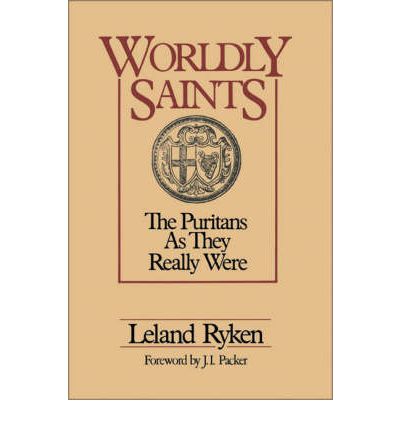
Ryken on the Puritans

November 24, 2017 by Brian

Ryken, Leland. Worldly Saints: The Puritans As They Really Were. Grand Rapids: Zondervan, 1986.

The title of this volume doesn’t indicate that the Puritans were worldly in the negative biblical sense. The pairing with “saints” is the tip-off. Ryken’s point is that the Puritans lived in the created world—in the world of work, marriage, family, money, education, and social action—as saints. Thus stereotypes of the Puritans as a dour, cloistered people are incorrect.

In seeking to correct the record Ryken surveys Puritan views on the topics listed above as well as on their views of the Bible, preaching, and worship. Two concluding chapters look at faults to avoid and strengths to learn from.

The book is full of primary source material and suggestions for further reading. It would be a good place to start in learning about the Puritans. The book is not perfect. I wondered at times about its appeal to Milton as a Puritan or if there was perhaps a greater diversity of views among the Puritans in certain areas that were being elided for the sake of summary (for instance, I think the Puritan view of revolution, the Civil War, and the Restoration may have been more varied). But these quibbles aside, this is a book well worth reading.

Filed Under: Uncategorized

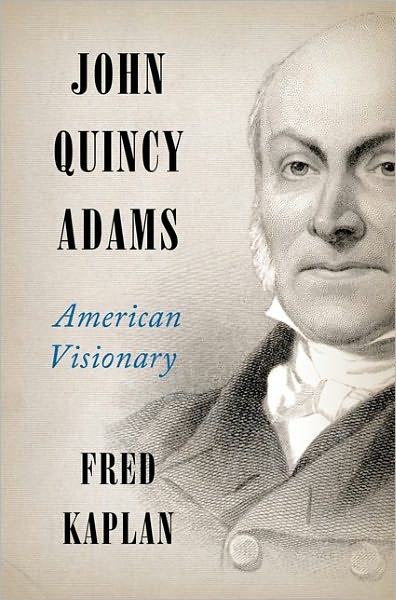
Review of Kaplan on John Quincy Adams

November 23, 2017 by Brian

Kaplan, Fred. John Quincy Adams: American Visionary. New York: Harper, 2014.

I’ve been interested in reading a biography of John Quincy Adams since reading David McCullough’s renowned biography of John Adams. I selected this particular biography for the unscientific reason that its Kindle edition was on sale. It nonetheless was a satisfying read. Kaplan not only covers the basic political history that is intertwined with Adams’s life, but he also covers Adams’s religious views and his literary interests. For instance, it was interesting to read of a debate John Quincy carried on with his father regarding the Trinity. John Adams favored the unitarian position while his son defended the trinitarian. (This seems to reflect the move toward rationalism by the founding generation and a move back toward orthodoxy in the following generation, due to the influence of the Second Great Awakening, though it should be noted that John Quincy Adams did not entirely embrace orthodox Protestantism.) The political life of John Quincy Adams is fascinating because it spans almost the entire era from the founding to the Civil War. Adams plays an important part in many key national events from negotiating the end of the War of 1812 to opposing Jacksonian populism to opposing slavery. He is involved in these momentous events as ambassador, president, and congressman. He was also the first president to be the son of a president and the only president to later serve in the House of Representatives. His philosophy of public service was to never put himself forward but to never decline if his fellow citizens called on him to serve.

Filed Under: Uncategorized

Leithart on Macbeth

November 20, 2017 by Brian

Leithart, Peter. “If It Were Done When ‘Tis Done: Macbeth.” In Brightest Heaven of Invention: A Christian Guide to Six Shakespeare Plays. Moscow, ID: Canon, 1996.

Leithart’s analysis is illuminating and enhanced my enjoyment of the play. Here’s an example:

Whether or not Macbeth will act on his ambition depends on his answer to the question, What does it mean to be a man? Two answers to this question are presented by the play, and Macbeth is forced to choose between them. When Lady Macbeth urges him to kill Duncan, he protests, ‘I dare do all that may become a man; who dares do more is none’ (1.7.46-47). On this view, one cannot be a man without placing limitations on desires and actions. Whoever tries to do more than ‘becomes a man’ becomes less than a man. Lady Macbeth, by contrast, operates on the view that you are not a man unless you act on every single desire. She asks her hesitating husband, ‘wouldst thou have that / Which thou esteem’st the ornament of life, / And live a coward in thine own esteem, / Letting ‘I dare not’ wait upon ‘I would’ (1.7.41-44), and adds, ‘When you durst do it, then you were a man’ (1.7.49). Any effort to control desire, to deny and suppress evil, or to place any limits whatever on action—all these for Lady Macbeth amount to nothing but cowardice.
. . . . . . . . .
His assault on the order of the world turns him into a beast. Having tried to lift himself above his place, he ends up falling into an abyss (see Ezekiel 28:1-10). As a consequence of his ambition to be more than human, he becomes less than human (see Daniel 4:1-37). By the end of the play, Macbeth is being seen, and even sees himself, as a subhuman creature: a baited bear, a hell-hound, a devil. He has dared do more than becomes a man, and at the last he is none. [162-63]

The one drawback is that the book is without footnotes or endnotes. Are all these observations simply Leithart’s or is he drawing on other sources?

Filed Under: Uncategorized

Warfield on New England Theology

November 18, 2017 by Brian

Warfield, Benjamin Breckinridge. “Edwards and the New England Theology.” In Works of Benjamin Breckinridge Warfield. Edited by Ethelbert D. Warfield, William Park Armstrong, and Caspar Wistar Hodge. 1932; Reprinted, Grand Rapids: Baker, 2003.

Warfield proceeds along chronological lines, beginning with Edwards’s youth and proceeding to the New England theology which developed after Edwards’s death. Warfield observes that it was in Edwards’s youth and collegiate years that he gave attention to scientific and metaphysical matters. He claims that in this period, independent of Berkeley, Edwards developed a system if idealism. Warfield observes that though Edwards did not continue with these philosophical writings after this period, the philosophical conclusions he reached in this period continued to inform his thought.

When Edwards became a pastor at Northampton, his writing turned to the pastoral. He produced sermons and practical works such as “Narrative of Surprising Conversions” and Religious Affections. Once removed from Northampton to Stockbridge, Edwards produced his major theological works on original sin, the freedom of the will, the chief end of man, the nature of true virtue, and the history of redemption. Though Edwards had long collected in notebooks thoughts on these subjects, this was the period in which he was able to bring these thoughts together into coherent works.

Warfield observes that the New England Theology that followed Edwards was influenced by the Edwards of the Awakening and by his theological method. Their theology, however, developed into something quite opposed to Edwards. Warfield observes that, like Edwards, their method of theology was philosophical and the result of “independent reflection.” But, unlike Edwards, they were not as rooted in historical theology. As a result, they developed a unique theology of which Warfield says, “it is only right frankly to describe as provincial.”

In the article Warfield observed that much of Edwards’s writing remained in manuscript at Yale. Since Warfield wrote those words much of this material has been transcribed and published. As a result, Edwards scholarship has developed. Nonetheless, this article remains a helpful introduction to Edwards and the New England THeology that followed him.

Filed Under: Church History

  • « Previous Page
  • 1
  • …
  • 32
  • 33
  • 34
  • 35
  • 36
  • …
  • 87
  • Next Page »