
Pennington, Jonathan T. Heaven and Earth in the Gospel of Matthew. Grand Rapids: Baker, 2007.
 Pennington challenges the commonly accepted idea that in Matthew’s phrase “kingdom of heaven,” “heaven” stands as a reverential circumlocution for God. He notes that though this view is commonly stated in virtually all commentaries on Matthew, it rests on a single article by Gustaf Dalman, which is methodologically problematic. It is difficult to establish from contemporary writings that the Jews consistently or widely adopted reverential circumlocutions for God.
He argues that instead Matthew uses the phrase “kingdom of heaven” as part of a larger heaven and earth theme in the Gospel. He notes four distinctive ways in which Matthew develops this theme. First, Matthew purposely uses the singular of the Greek word for heaven to refer to the terrestrial heaven and the plural of heaven to refer to the divine dwelling place. Second, he will pair heaven and earth as words and thematically. Third, he refers to God as Father in heaven both because Father conveyed kingly overtones and in contrast to earthly fathers. Finally, the phrase “kingdom of heaven” refers to a kingdom from heaven and/or a kingdom characterized by heaven. The terminology is developed from Daniel 2-7, and the point is to contrast the earthly kingdoms in rebellion against God (see also Psalm 2) and God’s heavenly kingdom.
Pennington himself summarizes the theme and its significance: “behind it all is an intentional focus on the theme of heaven and earth, specifically highlighting the current contrast or tensive relationship between the two realms, between God and humanity. Yet Matthew does not only emphasize the contras, but also the fact that this contrast or tension will be resolved at eschaton when heaven and earth are reunited through Jesus (6:9-10); 28:18). In fact, only by recognizing the intensity of the tension that currently exists between heaven and earth can we fully appreciate the significance of the eschaton in which the kingdom of heaven will come to earth” (342-43).
This is a tightly argued, well-written, stimulating book. I found it’s thesis compelling. The one major development that I would like to see is a sharpening of the referent of the kingdom of heaven/God in the Gospels. Pennington, and seemingly the literature he interacted with, took the kingdom of God to be the kingdom God rules. I would argue, however, that what is announced in the Gospels is not only a fuller manifestation of God’s reign on earth (though it is that). I would argue that the kingdom theme finds its roots in Genesis 1:26-29. Mankind is given rule over the earth, and it is the Son of Man who brings the heavenly kingdom to earth so that the rule of man is no longer bestial and in rebellion against the heavenly King but is a ruler under God’s greater rule. This understanding of the kingdom better recognizes the importance of the incarnation, the Davidic covenant, the key passages in Daniel 4 and 7, and the seminal nature of Genesis 1:28. What is more, I think the development harmonizes well with Pennington’s thesis and even strengthens his argument.
 Stuart, Douglas K.
 Hamilton, Victor P.
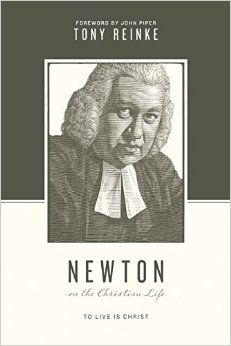 A simple desire to please God, to walk by the rule of his word, and to do all to his glory; like the famed philosopher’s stone, turns all the gold, consecrates the actions of common life, and makes everything that belongs to our situation in duty in civil in domestic life is part of our religion. When she is making our mending the children’s clothes, or teaching them, and when her maid (if serious) is cleaning the kitchen, or making a sauce, they may be as well employed, as when they are upon their knees or at the Lord’s Table. It is an unpleasant mistake to think all the time as lost which is not spent in reading, or hearing sermons, or prayer. These are properly called means of grace; they should be attended to in their proper season; but the fruits of grace are to appear in our common daily course of conduct. It would be wrong to neglect the house of God; it would be equally wrong to neglect the prudent management of her own house. It is chiefly as a mother in mistress of a family, that she can let her light shine to his praise. I would not have her think that she should serve the Lord better in any other station, than in the one to which his providence has placed her. I know that family cares are apt to encroach too much, but perhaps we should be worse off without them.
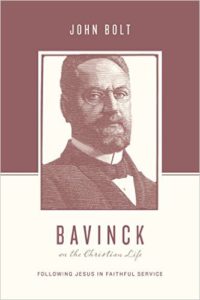 While these nineteenth century Christians [pietists] forgot the world for themselves, we run the danger of losing ourselves in the world. Nowadays we are out to convert the whole world, to conquer all areas of life for Christ. But we often neglect to ask whether we ourselves are truly converted and whether we belong to Christ in life and in death. For this is indeed what life boils down to. We may not banish this question from our personal or church life under the label of pietism or methodism. What does it profit a man if he gains the whole world, even for Christian principles, if he loses his own soul?