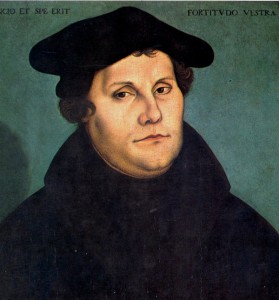
William Perkins could be called the father of Puritanism. His works, now being reprinted by Reformation Heritage Press, are well worth reading.
These two articles look at different aspects of Perkins’s thought:
Barry Waugh, “William Perkins: Augustine’s Protégé and Father of Puritan Theology,” The Confessional Presbyterian 11 (2015): 129-41.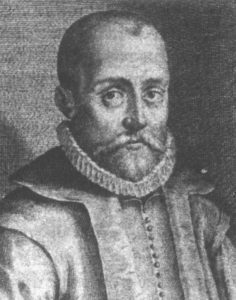
In this article Waugh provides some background to the Puritan movement and to William Perkins, noting the influence of his Laurence Chaderton as a patristics scholar at Cambridge before examining the use of Augustine in Perkins writings. Waugh’s quantitative analysis showed that Augustine played a significant role in Perkins’s writings, and his qualitative analysis of Perkins’s use of Augustine in one work showed significant influence on Perkins’s thought, though not a slavish following.
Ballitch, Andrew. “‘Not to Behold Faith, But the Object of Faith’: The Effect of William Perkins’s Doctrine of the Atonement on his Preaching of Assurance.” Themelios 40, no. 3 (Dec. 2015): 446-59.
Some, such as R. T. Kendall, have asserted that William Perkins’s belief in particular atonement prevented him from pointing people to the gospel or to Christ for the assurance of salvation since Perkins could only affirm that Christ atoned for the elect. This, it is claimed, led to an introspective approach to assurance. Ballitch surveys Perkins’s belief regarding the atonement and confirms that he did hold to a particular, rather than universal, view. But he looks at Perkins’s statements of how assurance should be preached and at his actual practice and concludes that Perkins points people in need of assurance to the gospel and to Christ and not inward alone.
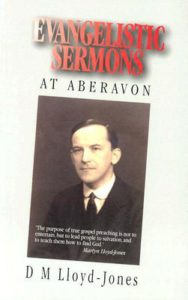 Lloyd-Jones, D. M.
  McGraw, Ryan, trans. “Johannes Wollebius’s Paecognita of Christian Theology from
  The thesis of Burer and Wallace in their NTS article is that one should take “
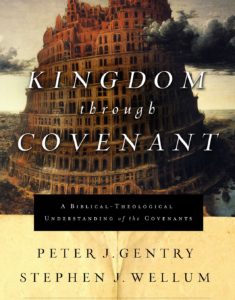 In this volume Wellum and Gentry embark on the ambitious project of laying out a third way between covenant theology and dispensationalism. They label their position New Covenant Theology or Progressive Covenantalism (others who hold a similar position are Tom Wells, Fred Zaspel, John Reisinger, Thomas Schreiner, and Jason Meyer). [Update 4/21/16: The authors wish to distinguish PC from NCT. The two share some similarities, but they do not wish them to be equated. Since Schreiner and Meyer both contribute to the new book on
 González’s history of Christianity is an excellent survey of church history. His style is engaging, the chapters and chapter sections are brief, and the is largely accurate. González is not an evangelical, so the reader will want to be discerning. For instance, I found him too open to the idea that there was not settled orthodoxy in the earliest history of the church. But in general I found his telling of the Christian story to be fair and accurate. Volume one ends just prior to the Reformation.